


Home Solar and EV Charging: Plan Power Before Plugging In
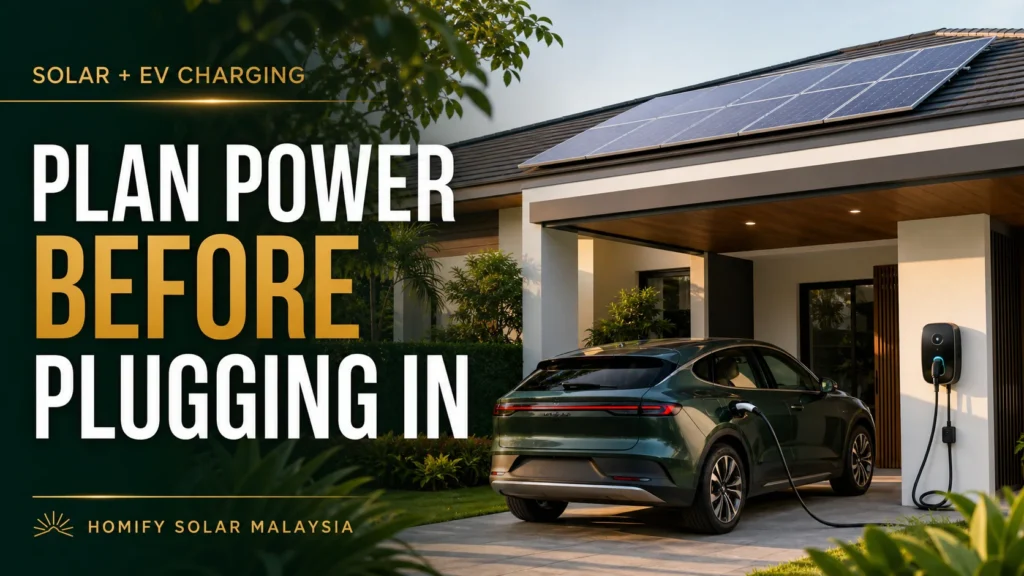
Buying an EV changes the home’s load profile, but the charger should not be sized from the car’s maximum charging specification alone. Start with daily driving distance, available parking time, house supply phase, existing major loads and the solar production window.
Estimate the energy actually needed
A car capable of high charging power may only need a modest daily top-up. Record typical kilometres, efficiency, days at home and the time the vehicle is parked. This converts the conversation from “fastest charger” to “enough energy before the next trip”.
Check the home electrical system
The distribution board, incoming supply, phase type, cable route, earthing, protective devices and charger location need assessment by qualified parties. Other large loads such as air-conditioning, water heating and cooking can operate at the same time. Load management may be more useful than simply selecting a higher-rated charger.
Align charging with solar and tariff periods
Daytime charging can increase direct solar self-consumption when the car is at home. Night charging may fit an off-peak Time of Use window for eligible customers, but it will not use live solar without storage. Compare the real parking routine before choosing timers or a battery.
Include safety and future needs
- Use compliant equipment and qualified installation.
- Plan weather protection, cable management and emergency isolation.
- Consider a second EV, but do not oversize without a load strategy.
- Keep commissioning and maintenance records.
HOMI can review solar and EV charging as one energy plan. Also read the daytime solar-use guide before choosing a charging schedule.
Frequently asked questions
Can an EV charge directly from rooftop solar?
Yes, when the car is connected while solar is generating and the system and charger are configured appropriately; grid import may still supplement demand.
Do I need the fastest home charger?
Not always. The right power depends on daily energy needs, parking time and the home electrical capacity.
Will night charging use my daytime solar?
Not without energy storage. Night charging normally imports from the grid, although an eligible Time of Use tariff may affect cost.
This article reflects official information checked on 1 August 2026 and is general guidance. Programme rules, tariff treatment, approval and actual savings remain subject to the latest PETRA, SEDA, Energy Commission and TNB requirements plus the property bill, roof and usage pattern.
Official sources
Want HOMI to review your TNB bill?
Send your usage pattern and HOMI can estimate whether Solar ATAP makes sense for your home or business.
Plan My Solar and EV Load