


Solar PV or solar hot water?
Give the roof space to the job your household needs most. A solar water heater collects heat for hot water. Solar photovoltaic panels generate electricity for connected loads. If you already have a roof tank or mainly use instant shower heaters after dark, map those arrangements before comparing quotes. Homi Solar Malaysia uses this guide to help households separate the two decisions.
Follow the energy
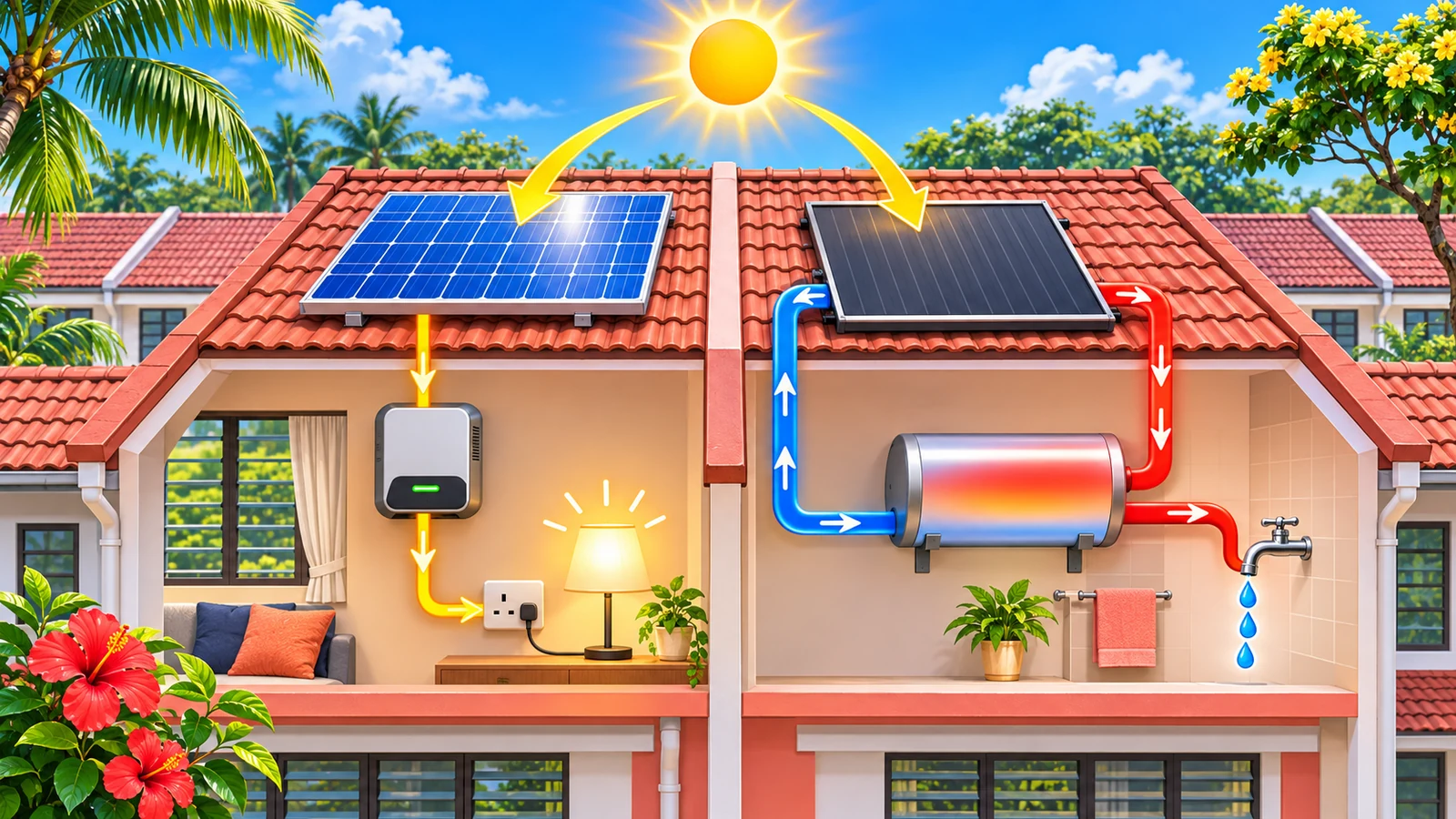
The U.S. Department of Energy’s PV explanation describes how photovoltaic cells turn sunlight into electricity. The electricity can serve a compatible heater or other loads when available and within the system’s design. A dedicated solar water heater instead captures heat for water, typically with a storage tank. The DOE solar water-heating guide describes solar collection and conventional backup heat. Ask how the quoted system supplies a shower after a cloudy afternoon or a rush of evening use.
Compare three roof plans
| Plan | What it supplies | What to confirm |
|---|---|---|
| Solar hot water | Heat for the connected taps. | Tank and collector positions, auxiliary heat and service access. |
| PV with existing heater | Electricity for connected loads. | Heater demand and when PV generation overlaps it. |
| Separate thermal and PV | Hot water and electricity from separate systems. | Roof zones, tank loads, shade, access and responsibility. |
The comparison uses the functions in the DOE material. The choice depends on your roof, plumbing and load timing. A full hot-water tank holds heat for later use. It cannot supply an evening electrical load.
Compare like with like
Hypothetical example: Raising 80 litres of water by 20°C takes about 1.86 kWh of heat before losses (80 kg × 4.186 kJ/kg·°C × 20°C ÷ 3,600). It is an energy calculation, with no suggested temperature setting. It does not show how much grid electricity the home will avoid. Tank and pipe losses, heater technology and when supplementary heat runs all matter. Ask for thermal kWh delivered to water and electricity kWh supplied or purchased as separate figures.
Bring one roof plan
- Note which taps have hot water and which heaters serve them.
- Record typical shower times and periods of unusually high use.
- Mark existing tanks, collectors and shaded zones on a sketch from safe ground.
- Ask for a written check of roof load, maintenance space, drainage and pipe routes.
- Ask who is responsible for the plumbing, PV and auxiliary heater after handover.
References checked on 11 November 2026. The Energy Commission’s June 2026 PV guideline is for self-consumption in Peninsular Malaysia. Confirm the applicable electrical and plumbing requirements for the actual address, including in Sabah or Sarawak. This comparison gives no tariff, rebate, approval or savings estimate.
Bring a non-sensitive roof sketch and hot-water schedule to the HOMI team, or view solar services. Agree a private channel before sharing bills, account details or plans. Keep them out of public comments and AI tools.
Common questions
Can PV supply an electric shower heater?
It can contribute electricity when generation and heater operation overlap, subject to system design. An evening shower needs another electricity source unless suitable storage can supply it.
Does a hot-water tank replace a battery?
A hot-water tank stores heat for water. Electrical equipment still needs electricity from a suitable supply.
Can I keep both systems?
Often worth assessing. Have both installers check usable roof space, shade from the tank, loads, drainage and service access on a shared plan.
Is litres enough to compare quotes?
Tank volume is one input. Ask about usable hot water, expected demand, standby losses and when auxiliary heating is needed.
Source notes
- How Does Solar Energy Work? — U.S. Department of Energy
- Water Heaters Solar — U.S. Department of Energy, Building Science Education
- Guidelines for Solar Photovoltaic for Self-Consumption in Peninsular Malaysia — Suruhanjaya Tenaga
This article reflects official information checked on 11 November 2026 and is general guidance. Programme rules, tariff treatment, approval and actual savings remain subject to the latest PETRA, SEDA, Energy Commission and TNB requirements plus the property bill, roof and usage pattern.
Want HOMI to review your TNB bill?
Send your usage pattern and HOMI can estimate whether Solar ATAP makes sense for your home or business.
Discuss Your Roof and Hot Water Plan