
Green Campuses: More Than Just Savings, It’s About Nurturing Future Generations
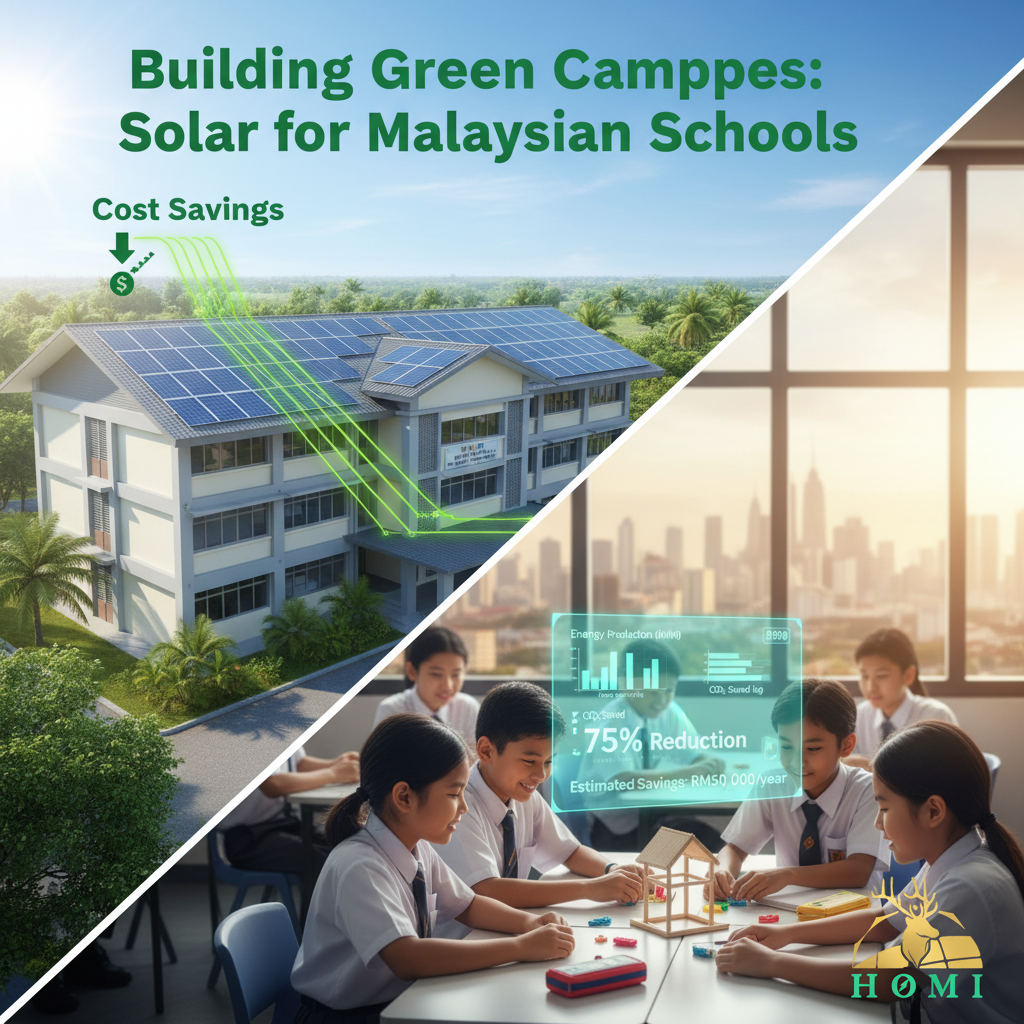
In Malaysia, the operational costs for schools and educational institutions are steadily increasing, with electricity bills forming a significant portion. Concurrently, the global emphasis on sustainability and STEM (Science, Technology, Engineering, Mathematics) education drives educators to integrate these concepts into daily teaching. A solar photovoltaic system offers a perfect solution to both these challenges.
I. Financial Viability: Significant Electricity Bill Savings for Schools
Schools operate for long hours, typically from morning to afternoon, which perfectly aligns with the peak solar power generation times.
-
Substantial Reduction in Operational Costs:
-
High Electricity Burden: Schools consume significant electricity for air conditioning, lighting, computer labs, and other equipment. After installing a solar system, most daytime electricity needs can be met by self-generated clean energy, directly cutting down electricity expenses.
-
Advantages of the NEM Scheme: Through Malaysia’s Net Energy Metering (NEM) program, schools can export excess solar power generated during the day back to the grid and receive 1:1 electricity bill credits. This means schools not only save money but also convert unused green energy into economic value.
-
Long-term Investment Return: A solar system is a long-term investment. After the initial outlay, future electricity expenditures will be significantly reduced, freeing up valuable budget for improving educational facilities, hiring more staff, or supporting other educational programs.
-
-
Enhanced Financial Sustainability:
-
Budget Stability: Schools are no longer subject to fluctuating electricity price increases, allowing for better budget planning and control.
-
Green Funding Opportunities: Many government and non-governmental organizations offer grants for green energy or environmental projects. Schools with solar projects may qualify for additional financial support.
-
II. Environmental Education & STEM Empowerment: A Living Learning Platform
A solar system is not just equipment on the roof; it is an invaluable educational resource.
-
Practical STEM Education Tool:
-
Scientific Principles: Students can directly learn about the photovoltaic effect, energy conversion, circuit principles, and other scientific knowledge.
-
Technological Application: Understand the working principles and technological applications of components like solar panels, inverters, and batteries.
-
Engineering Design: By observing system layouts and structures, students can comprehend engineering design considerations, such as how to maximize sunlight exposure and adapt to weather changes.
-
Mathematical Analysis: Real-time monitoring of power generation data allows for data analysis, graph plotting, and calculation of power output, electricity savings, and carbon emissions, fostering data analysis skills.
-
Interactive Learning: Installing real-time monitoring screens on campus to display current power generation, consumption, and carbon reduction data allows students to observe and learn continuously.
-
-
Fostering Environmental Awareness and Sustainable Development Concepts:
-
First-hand Experience: Students directly witness their school’s commitment to energy saving and emission reduction through solar power, cultivating a sense of environmental responsibility and proactivity.
-
Green Role Models: A green campus image inspires students to adopt sustainable lifestyles in their daily lives, becoming future environmental advocates.
-
Interdisciplinary Projects: Teachers can design interdisciplinary projects around the solar system, such as:
-
Social Sciences: Studying energy policies and the societal impact of climate change.
-
Arts: Designing green campus promotional posters, sparking creativity.
-
Economics: Analyzing the ROI and economic benefits of solar energy.
-
-
-
Enhancing School Image and Community Impact:
-
Brand Value: Schools with green energy systems demonstrate their commitment to innovation, sustainability, and students’ future development to parents, the community, and prospective students, enhancing the school’s modern and forward-thinking image.
-
Community Engagement: Organizing open days to showcase the school’s solar project and inviting community members to participate in environmental education can expand its influence.
-
Conclusion: In Malaysia, installing solar systems for schools not only effectively addresses the financial burden of high electricity bills but also transforms campuses into vibrant green educational hubs. This is not just an investment in the future of energy, but a crucial investment in the future of students and the planet. Build a green campus, starting with solar.