
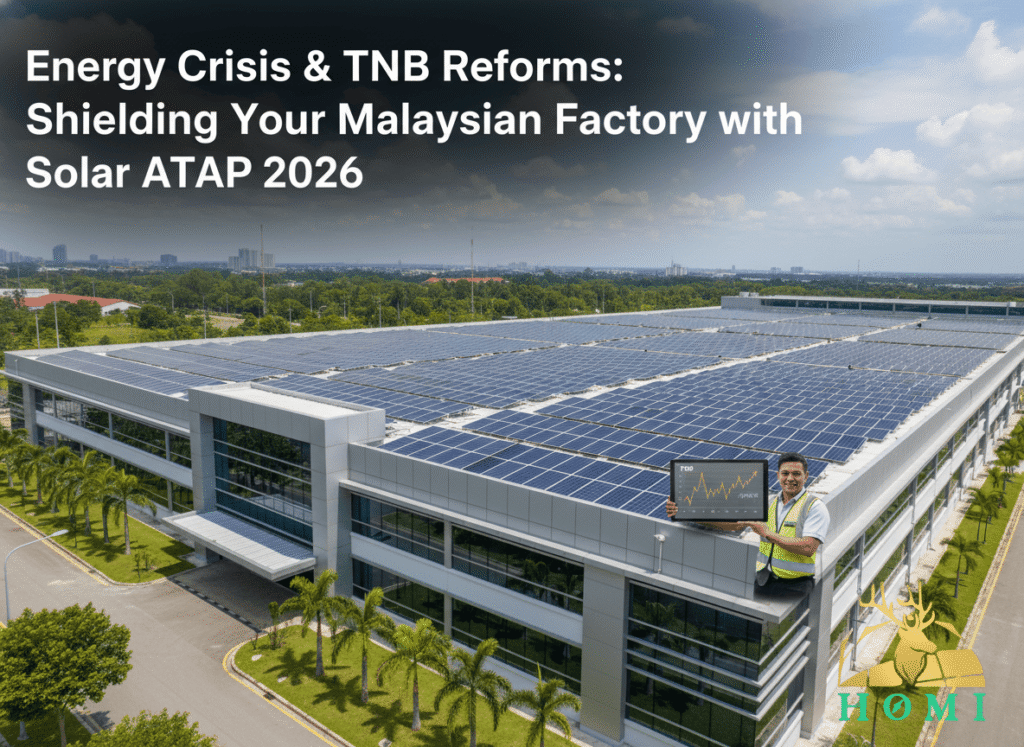
Energy Crisis & TNB Reforms: Shielding Your Malaysian Factory with Solar ATAP 2026
For factory owners and SME operators, rising energy uncertainty is no longer a distant issue. It is now a direct pressure on margins, cash flow, and pricing competitiveness. When electricity costs become harder to predict, every operational decision matters more.
Why Energy Pressure Is Hitting Factories Harder
Factories cannot simply switch off production when energy costs rise. Machines, ventilation, cooling, compressors, lighting, and office support loads continue to run as part of normal operations. That means every tariff change or utility cost increase can feed directly into manufacturing cost.
Why Solar ATAP 2026 Matters for Commercial Users
One of the biggest advantages for factories is the ability to size solar around larger business demand. Instead of treating solar as a small side upgrade, commercial operators can use it as part of a broader energy strategy. The key is matching system design to actual demand so the installation works for operations, not just for brochures.
Why 100% Maximum Demand Thinking Changes the Conversation
For many businesses, Maximum Demand is one of the most important numbers in energy planning. When solar is designed around daytime factory usage, it can help reduce dependence on expensive grid electricity during core production hours. That makes proper sizing, load analysis, and roof planning essential for stronger commercial results.
How HOMI Helps Factories Plan More Precisely
HOMI does not rely on rough estimates or generic panel counts. We review your operating hours, load profile, roof condition, and business priorities before proposing a commercial system. That means better alignment between generation and usage, better compliance planning, and a more practical path for factories that want serious energy control.
Simple Factory Solar Planning Calculator
Use this quick tool to estimate how a properly sized solar strategy may reduce daytime electricity cost pressure.
Engineering Quality Still Matters
For commercial buildings, solar is not just a financial decision. It is also an engineering and risk-management decision. A good installer should think about structure, waterproofing, cable routing, safety, maintenance access, and long-term system reliability. That is why HOMI emphasizes end-to-end planning instead of low-price shortcuts.
Protect Competitiveness, Not Just the Roof
In a tougher operating environment, factories need more than a lower bill. They need a smarter energy strategy that supports margin protection over time. A properly planned Solar ATAP system can become part of that strategy when it is sized with discipline and delivered with reliable commercial workmanship.
FAQ
Is Solar ATAP suitable for factories and SMEs?
Yes. Commercial users can benefit when the system is sized around actual daytime operations, roof suitability, and real business demand.
Why is Maximum Demand important in factory solar planning?
Because it helps frame how large and how strategically useful a commercial system can be. It is one of the core numbers that should guide proper solar sizing for industrial users.
What makes HOMI different for commercial projects?
HOMI focuses on real load analysis, disciplined engineering, roof-safe installation methods, and end-to-end planning instead of one-size-fits-all proposals.