
Solar ATAP 2026 in Malaysia: Why Hot, Humid March Weather Is Perfect for a Self-Consumption Air-Cond Focused System
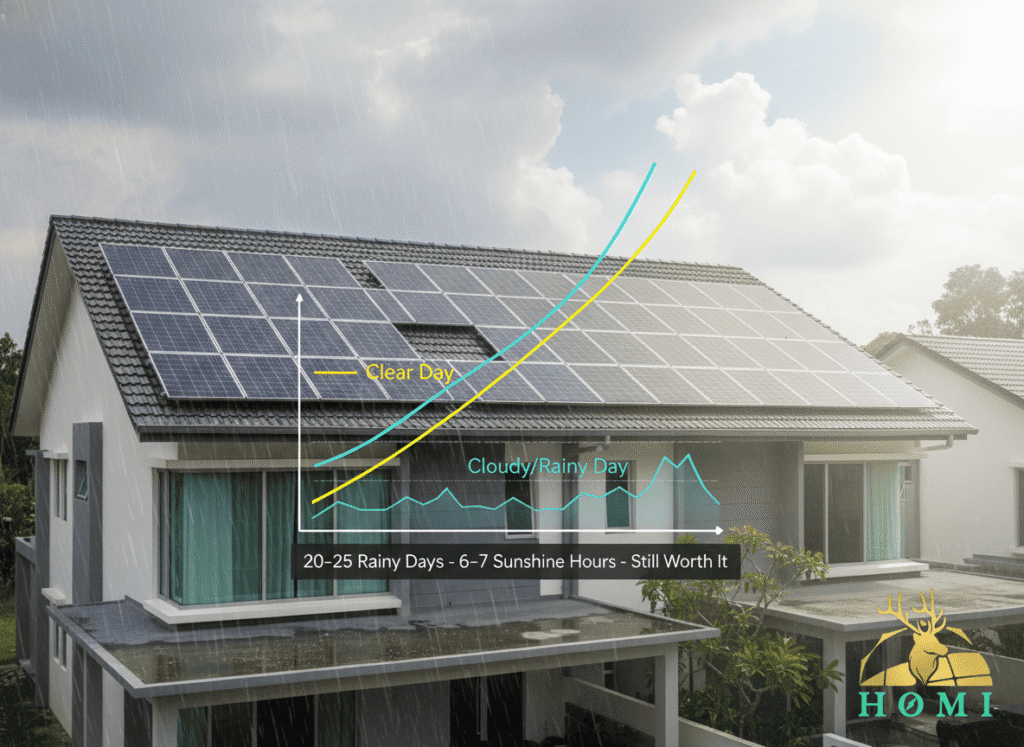
Kuala Lumpur and many west-coast cities see daytime highs around 32–33°C in March, with very high humidity, strong UV and frequent afternoon showers—yet still about 7 hours of bright sunshine per day on average. [web:315][web:317][web:320] At the same time, Solar ATAP is built as a true **self-consumption** scheme where domestic export credits only offset the Energy Charge and expire every billing cycle with **no rollover**, so every extra kWh you can use in real time matters more than “selling” it back. [web:33][web:77][web:44]
For high‑usage landed homes, this combination—strong midday sun, heavy daytime cooling load and no‑rollover credits—makes March the ideal month to think about a **self-consumption‑optimised** Solar ATAP system, especially for air‑cond and fans.
1. March Weather: Hot, Humid and Almost Always AC-On
Across much of Malaysia, March is either the hottest or one of the hottest months of the year, particularly in Kuala Lumpur and other west‑coast cities. [web:315][web:316][web:317][web:320]
- Daytime highs frequently reach around 33°C, with night temperatures staying near 23–24°C and very high humidity. [web:315][web:320]
- There are typically about 17 days with some rainfall in March and around 7 hours of bright sunshine per day in Kuala Lumpur. [web:315]
- West‑coast locations like Malacca and Langkawi also see warm temperatures around 31–33°C with intermittent showers. [web:316][web:318]
For landed homes, that usually translates into long afternoon AC hours, more fans running non‑stop and a noticeable jump in the kWh portion of the TNB bill—especially in higher tariff blocks.
2. Solar ATAP Rules: Why “Self-Consumption First” Beats “Selling to TNB”
Solar ATAP replaced NEM and tightened how export credits work for homes. [web:33][web:77][web:44]
| Feature | Old NEM 3.0 | Solar ATAP (2026) |
|---|---|---|
| Export credit value | Up to 1:1 against the full bill. [web:77] | Offsets Energy Charge only for domestic users. [web:33][web:44] |
| Credit rollover | Up to 12 months carry‑forward. [web:77] | No rollover; credits expire every billing cycle. [web:33][web:12] |
| Design focus | Roof‑maxing often made sense. | Right‑sizing for self‑consumption is strongly encouraged. [web:33][web:77] |
In a no‑rollover world, a “big export hero” system that regularly over‑produces when nobody is using power is worth less than a moderate system that feeds your AC and fans all afternoon. Solar ATAP rewards using your own kWh immediately, not banking them. [web:33][web:77][web:44]
3. Why March Weather Aligns Perfectly with Solar Self-Consumption
Malaysia’s solar resource gives about 4–5 kWh per day per 1 kWp of installed capacity, with the strongest output between roughly 10am and 4pm. [web:206][web:319] That happens to overlap with the hottest and stickiest part of the day in March. [web:315][web:317]
- 11am–4pm: Roof receives strong sun; Solar ATAP system is near peak output. [web:206][web:319]
- 11am–5pm: Living room, bedroom and perhaps home office AC are running harder to fight 32–33°C plus high humidity. [web:315][web:317]
- Fans, fridge and other always‑on loads are drawing steady power.
Because Solar ATAP lets your home **consume solar first**, every kWh that goes directly into air‑cond compressors and fans during March afternoons is one less kWh you buy from TNB’s Energy Charge component, which is exactly where ATAP credits apply. [web:33][web:44]
4. Simple March Self-Consumption Savings Calculator (AC + Fans)
March Self-Consumption Savings Calculator (Air-Cond + Fans)
Estimate how much of your March daytime cooling load could be covered by Solar ATAP—and what that might save vs buying all kWh from TNB.
Assumptions: solar yield ≈ 4.5 kWh/day per kWp with ~65% of that between 11am–5pm in March, high humidity and 33°C daytime highs; Energy Charge used as the relevant kWh rate under Solar ATAP. [web:206][web:315][web:33]
5. How HOMI Designs “Self-Consumption First” Solar ATAP Systems for High-Usage Landed Homes
Instead of chasing the biggest kW your roof can fit, HOMI designs **precision self‑consumption** systems calibrated to your actual March‑style daytime load.
Step 1: Analyse Your 12–24 Months of TNB Usage
- We review your kWh across cooler and hotter months, including March‑level heat and festive spikes like CNY. [web:294][web:310]
- We estimate how many kWh typically fall in daytime vs evening, and how often you cross higher tariff bands.
Step 2: Model Your Daytime Cooling Profile against Solar Output
- We map AC tonnage, number of rooms cooled and fan usage during 10am–5pm, especially in hot months. [web:315][web:317]
- We simulate 2–3 system sizes (e.g. 4, 6 and 8 kWp) to see how much of that cooling can be consistently powered by solar. [web:206][web:319]
Step 3: Apply Solar ATAP’s No-Rollover Credit Logic
- We apply domestic ATAP rules: credits offset Energy Charge only and expire monthly. [web:33][web:44][web:12]
- We flag designs where export frequently exceeds your monthly Energy Charge—clear signs of oversizing under ATAP.
The result is a “self-use first” Solar ATAP design that targets March‑like afternoons—where your AC pain is highest and solar production is strongest—without paying for excess kW that regularly spill free energy into the grid.
FAQ: March Weather, Solar ATAP & Self-Consumption
Why is March specifically a good time to think about Solar ATAP?
March is typically one of the hottest months in Malaysia, with daytime temperatures often around 33°C and very high humidity, plus strong sunshine and frequent showers. [web:315][web:316][web:317][web:320] This combination drives heavy daytime air‑conditioning usage exactly when solar output is highest, making it easier to align Solar ATAP generation with real-time self-consumption.
What does Solar ATAP’s “no rollover” rule mean for my system size?
Under Solar ATAP, domestic users receive bill credits for exported energy at the Energy Charge rate, but any unused credits expire at the end of each billing cycle and cannot be carried forward or cashed out. [web:33][web:77][web:44] This makes oversizing less attractive than under NEM, because frequent surplus exports above your monthly Energy Charge can have little or no value, especially in lower-usage months.
How do I know if my home is suitable for a “self-consumption first” Solar ATAP system?
Key indicators include: medium to high monthly kWh usage, significant daytime presence (WFH, kids or retirees at home), regular afternoon air‑cond use, and a reasonably unshaded, south‑ish roof. [web:206][web:19][web:33] With these conditions, a right‑sized Solar ATAP system can reliably offset the Energy Charge portion of your bill without frequently wasting credits.