Solar ATAP in Rainy Malacca & Shah Alam: How Proper Malaysia Solar Mounting Prevents Roof Leaks on Hot, Wet February Days
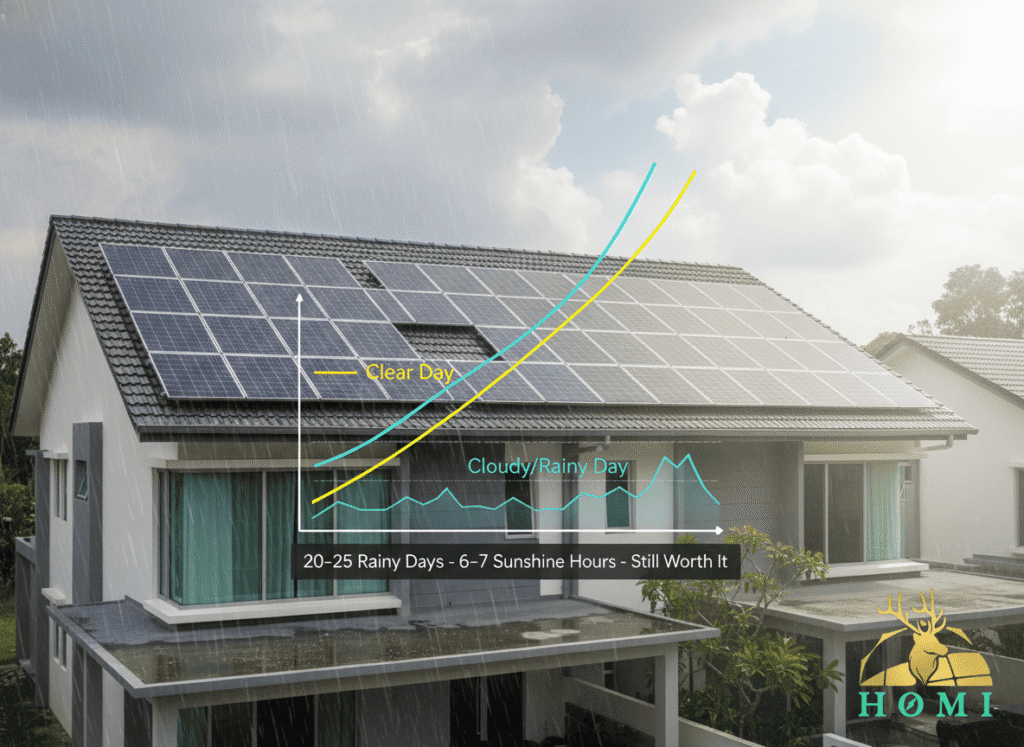
In February, Malacca typically sees around 180–190 mm of rain over roughly 10–11 days, while Shah Alam can receive more than 130–140 mm with rain on over half the days. [web:278][web:280][web:281][web:279] It is perfectly normal for coastal homeowners to worry that adding aluminium rails and brackets for Solar ATAP will make things worse—but with the right mounting system, sealing and inspection, a solar installation can remain watertight for decades. [web:282][web:287]
This guide explains how Malaysia’s hot‑and‑wet coastal climate affects your roof, where leaks usually happen after solar, and what HOMI does in design and installation to protect your roof integrity—not just your TNB bill.
1. February Weather in Malacca & Shah Alam: Hot Roofs, Frequent Rain
Coastal and near‑coastal towns like Malacca and Shah Alam are hot and humid almost all year, with a mix of strong sun and frequent rain in February. [web:278][web:281][web:286][web:283]
- Malacca: around 180–190 mm of rain across roughly 10–11 rainy days in February; “wet” but with good sunshine in between showers. [web:278][web:276]
- Shah Alam: average highs around 30–31°C, with more than 130–140 mm of rainfall and rain on 15+ days in February. [web:279][web:281]
That means your roof cycles between intense heating and heavy rain, which can expose any weakness—cracked tiles, poorly sealed penetrations or low‑quality mounting hardware.
2. Where Roof Leaks Usually Come From After Solar
Most leaks after a solar installation are not caused by the panels themselves, but by how the mounting system interacts with the roof. [web:282][web:287]
- Penetration points where mounting bolts pass through tiles or metal sheets into rafters or purlins.
- Poor flashing around hooks or brackets—missing or mis‑aligned metal flashing that should guide water away. [web:282]
- Damaged or mis‑cut tiles when installers break or grind tiles without proper replacements.
- Improper rail placement that channels water into valleys or old weak spots instead of letting it flow off naturally.
In other words, the risk is not “solar always causes leaks” but “bad mounting and sealing cause leaks”—which is why HOMI’s installation standards focus so heavily on roof integrity. [web:282][web:287]
3. Key Waterproofing Elements for Solar Mounting on Malaysian Roofs
For landed homes in Malacca, Shah Alam and similar climates, a well‑engineered mounting system should include several specific waterproofing features. [web:282][web:287][web:285]
3.1 Correct Rail Anchoring into Structural Members
- Rails are fixed into roof trusses or structural supports—not only into tile or thin metal sheeting. [web:287]
- Mounting points are laid out to spread weight and avoid concentrating stress on a few tiles.
3.2 Flashing & Sealing at Every Penetration
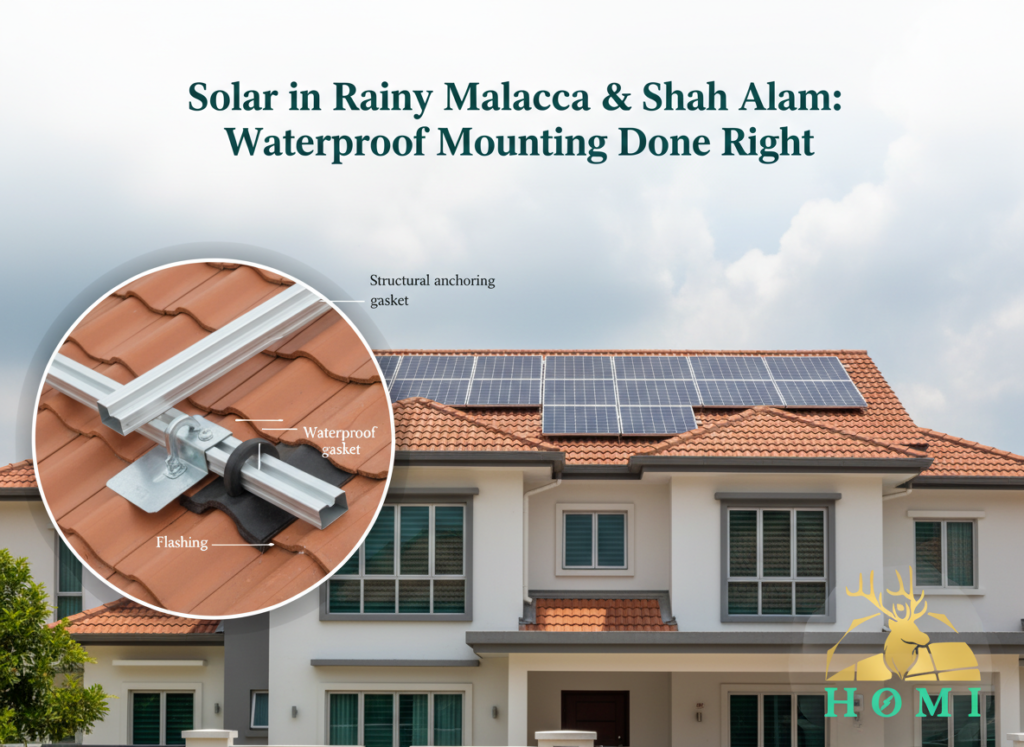
- Use of purpose‑made **flashing plates or L‑feet with integrated flashing** for tile roofs. [web:282]
- Application of high‑quality roofing sealant and EPDM or similar **rubber gaskets** under and around the bolt to prevent capillary ingress.
- Correct overlap direction so rainwater flows over, not under, the flashing pieces.
3.3 Tile Handling and Replacement
- Tiles are lifted, not smashed, to fit hooks; any cracked tiles are replaced with new ones, not “glued back”. [web:287]
- Hook height and rail height are adjusted so tile coverage remains sufficient against wind‑driven rain.
HOMI also aligns with Bomba and PV installation guidelines on safe access, setbacks and routing, which indirectly help by avoiding over‑crowding and awkward penetrations on the roof. [web:36][web:285]
4. Interactive: Roof Leak Risk Self-Check Before Solar
Roof Leak Risk Self-Check (Pre‑Solar)
Tick what applies to your roof. Then click the button for a simple risk message you can share with HOMI.
This is a basic self‑check. HOMI always performs on‑site roof inspection before confirming design and mounting layout, especially in rainy coastal zones. [web:287]
5. What HOMI’s “Waterproof‑First” Standard Looks Like (Beyond the Panels)
HOMI treats your roof as a long‑term asset, not just a platform for panels.
Step 1: Pre‑Installation Roof Condition Survey
- Visual inspection for existing leaks, cracked tiles, soft spots and previous patch jobs. [web:282][web:287]
- Assessment of roof age and type to match the correct mounting hardware (tile hooks, standing‑seam clamps, etc.).
Step 2: Mounting & Waterproofing Design
- Detailed rail layout to minimise penetrations and avoid valleys, ridges and historically weak areas. [web:282]
- Specification of bracket types, flashing kits, sealants and gaskets suitable for Malaysia’s hot, wet climate.
Step 3: Installation QA & Handover
- On‑site checks that every penetration is flashed and sealed correctly, with photos documented for your record.
- Post‑installation walkthrough on how to visually inspect from the attic/ceiling after heavy rain and when to call HOMI for inspection.
A properly installed Solar ATAP system should not make your roof more vulnerable; in many cases, the rails and panels actually shade and protect portions of the roof from UV and direct rain impact. The real differentiator is the installer’s standard, not the weather. [web:282][web:287]
FAQ: Rainy Season Roofs, Solar Mounting & Leaks
Does installing solar panels make roof leaks more likely in Malacca or Shah Alam?
Not if the mounting system and waterproofing are done correctly. Roof leaks typically originate from poorly sealed penetration points, inadequate flashing or damaged tiles, rather than the panels themselves. [web:282][web:287] In wet but sunny climates like Malacca and Shah Alam, careful anchoring into structural members, proper flashing and tile replacement are critical to maintaining a watertight roof. [web:278][web:279][web:281]
How much rain do Malacca and Shah Alam get in February?
Malacca typically receives around 180–190 mm of rainfall in February over roughly 10–11 days, while Shah Alam can see more than 130–140 mm of rain spread across around 15 rainy days. [web:278][web:281][web:279] This combination of frequent showers and high temperatures makes robust waterproofing and periodic inspections especially important for solar homes.
What should I ask a solar installer to see before I sign?
Ask for: (1) the exact mounting system brand and model, (2) how they flash and seal every penetration, (3) how they handle cracked tiles and existing leak areas, and (4) example photos of their installations in rainy coastal areas. [web:282][web:287] A reputable installer should be able to show you their waterproofing details, not just panel brands and kW numbers.