Solar ATAP Malaysia CNY Guide: How to Use Rooftop Solar to Hold Your TNB Bill When February AFA Shrinks and Air-Cond Runs All Day
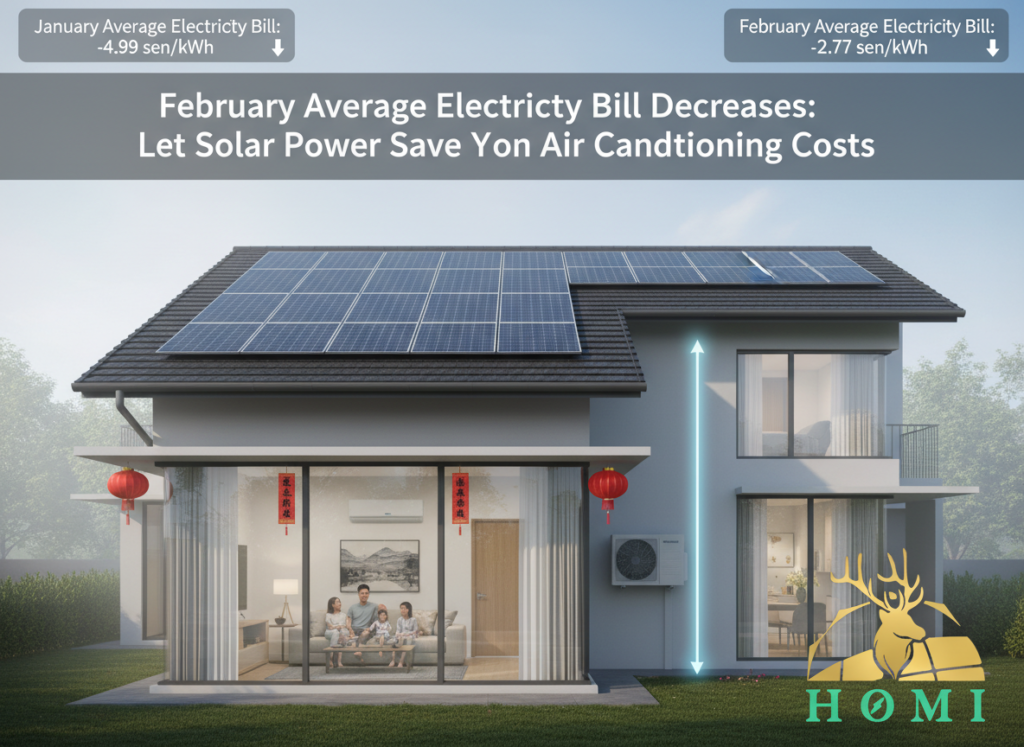
The Automatic Fuel Adjustment (AFA) rebate for February 2026 is set at -2.77 sen/kWh, down from -4.99 sen/kWh in January and -6.42 sen/kWh in December 2025. [web:172][web:173] For high‑usage homes in KL, Selangor, Johor Bahru and Melaka, that means the same kWh now receive a weaker discount, right as Chinese New Year heat pushes air‑cond hours up.
In this guide, we break down how shrinking AFA, 31–33°C daytime weather and heavy cooling loads combine to make your February TNB bill heavier—and how a precisely sized Solar ATAP system can help you “hold the line” on daytime air‑cond costs without wasting credits.
1. February 2026: Smaller AFA Rebate, Heavier TNB Bill Risk
The AFA is a monthly adjustment set by the Energy Commission (ST), applied as a surcharge or rebate of up to 3 sen/kWh based on fuel cost trends. [web:172][web:173] In early 2026, the trajectory for domestic users looks like this:
| Month | AFA Rate | What It Means for You |
|---|---|---|
| December 2025 | -6.42 sen/kWh | Strong rebate, noticeably lighter bills for the same usage. [web:172] |
| January 2026 | -4.99 sen/kWh | Rebate shrinks; discount per kWh already smaller than December. [web:172][web:173] |
| February 2026 | -2.77 sen/kWh | Rebate almost halved vs January, meaning heavier bills for the same kWh. [web:172] |
For households using more than 1,500 kWh per month, the effective energy cost bundles generation (37.03 sen), capacity and network charges into around 54.43 sen/kWh before the AFA discount is applied. [web:172] When the rebate shrinks, your net rate per kWh creeps higher, even though nothing changed about how long you ran your air‑cond.
2. 31–33°C CNY Weather: Why Air‑Cond Dominates the Bill
In Kuala Lumpur and similar lowland cities, February daytime temperatures commonly reach around 32–33°C, with nights around 22–24°C and high humidity. [web:197][web:202] That combination makes living rooms, upstairs bedrooms and home offices heavily reliant on AC from late morning through evening.
- Multiple split‑unit air‑conds running 6–10 hours a day over the CNY period.
- Daytime kWh jumping into higher tariff and usage blocks, especially above 600 kWh/month. [web:172][web:194]
- Cooling easily becoming one of the biggest contributors to the TNB bill whenever heat and family gatherings overlap.
In other words, February gives you a double squeeze: higher cooling hours and a smaller AFA discount per kWh.
3. How Solar ATAP Helps “Hold” Daytime Cooling Costs (If Sized Correctly)
Solar ATAP is structured as a self-consumption‑first scheme: your home uses rooftop solar output first, and only surplus goes out to the grid as export. [web:33][web:44][web:147] Exported energy gives you credits that offset the energy charge portion of your bill, but those credits do not roll over to the next month and are forfeited if unused. [web:33][web:56][web:188]
| No Solar ATAP | With Right‑Sized Solar ATAP | |
|---|---|---|
| 11am–4pm Air‑Cond Energy | Mostly from TNB, fully exposed to February’s smaller AFA rebate. | Large share covered by your own solar, reducing kWh billed at 44–54 sen/kWh. [web:172][web:33] |
| AFA Sensitivity | High: every AFA change hits most of your cooling usage. | Lower: part of your cooling is “insulated” because you simply buy fewer kWh. |
| Risk of Wasted Credits | None (no solar). | Depends on sizing—oversized systems may export more than you can offset in one month. [web:33][web:56][web:147] |
This is why “precision sizing” is so important: you want a system that meaningfully covers your daytime cooling and base load, without overshooting into a level of export that regularly exceeds your monthly energy charge.
4. Simple Calculator: How Much February Cooling Can Solar Cover?
February Cooling & Solar Savings Estimator
Use this to get a rough idea of how much of your daytime air‑cond cost solar could help “hold”, given February’s smaller AFA rebate.
Note: We use an approximate February net rate of ~0.52 RM/kWh for high‑usage homes after AFA (-2.77 sen/kWh), based on typical bundled charges. Real bills vary by usage block and incentives. [web:172]
5. Why HOMI Sizes Around Your Real TNB Data, Not Just Roof Photos
Because Solar ATAP credits are monthly, non‑rollover and energy‑only, HOMI’s sizing process starts with your actual usage profile instead of a generic “package size”. [web:33][web:56][web:147]
Step 1: Analyse Your TNB Bills and Load Curve
- We review 12–24 months of TNB bills to understand your kWh usage, seasonal peaks and whether you often exceed 600 or 1,000 kWh. [web:172][web:194]
- We examine how much of your load occurs in the hot daytime window vs night, especially for AC. [web:197][web:202]
Step 2: Simulate Solar ATAP Self‑Consumption vs Export
- We model how a given kWp size would perform against your hourly or typical load pattern.
- We estimate how much of your 11am–5pm cooling could be supplied by solar on a typical February day. [web:33][web:44][web:147]
Step 3: Choose a “CNY‑Proof” Size, Not a Maximum Size
- We avoid blindly filling the entire roof if the resulting export would regularly exceed your monthly energy charge. [web:33][web:56]
- We propose a size where most generation either directly cools your home or offsets energy charges you would actually pay within the month.
The result is a system that helps you stay comfortable even when the heat and AFA both climb, instead of a system that looks impressive in kW but wastes value in unused credits.
FAQ: February AFA, Solar ATAP & Air‑Cond Bills
Why does my February TNB bill feel heavier even if I use similar kWh?
Because the AFA rebate dropped from -4.99 sen/kWh in January 2026 to -2.77 sen/kWh in February 2026, each kWh now enjoys a smaller discount. [web:172][web:173] If your usage stayed similar or went up due to heat and CNY, the weaker rebate means a heavier bill.
Can Solar ATAP fully cancel out my air‑cond cost?
A well‑designed system can cover much of your daytime AC load on sunny days, but Solar ATAP credits only offset energy charges and do not roll over to future months. [web:33][web:56][web:147][web:188] It is usually smarter to target strong coverage of your daytime usage rather than chase a RM 0 bill, which may lead to oversizing.
Why can’t I just install the biggest system my roof can fit?
Under Solar ATAP, any export credits you cannot use within the same billing cycle are forfeited, and credits only apply to the energy charge. [web:33][web:56][web:147] An oversized system can therefore send a lot of low‑value export to the grid. Precision sizing based on your TNB data generally gives better real savings.