Malaysia Heatwave 2026: Why Solar ATAP + TNB Time-of-Use (TOU) Is the Ultimate Cost-Cutting Strategy for Homes & SMEs
Forecasts for February to June 2026 predict hotter, drier weather for Peninsular Malaysia’s west coast, with KL, Selangor and Melaka seeing daytime highs of **31–33°C**. [web:234][web:236][web:238][web:241] For businesses and high‑usage homes, this means heavier air‑cond bills—but also a unique opportunity to combine **Solar ATAP** with **Time-of-Use (TOU) tariffs** to slash costs.
In this guide, we explain why the first half of 2026 is the perfect time to rethink your energy strategy: using the intense midday sun to cover your cooling load while shifting remaining grid usage to cheaper Off-Peak rates.
1. The Weather Context: Heatwave Until April 2026
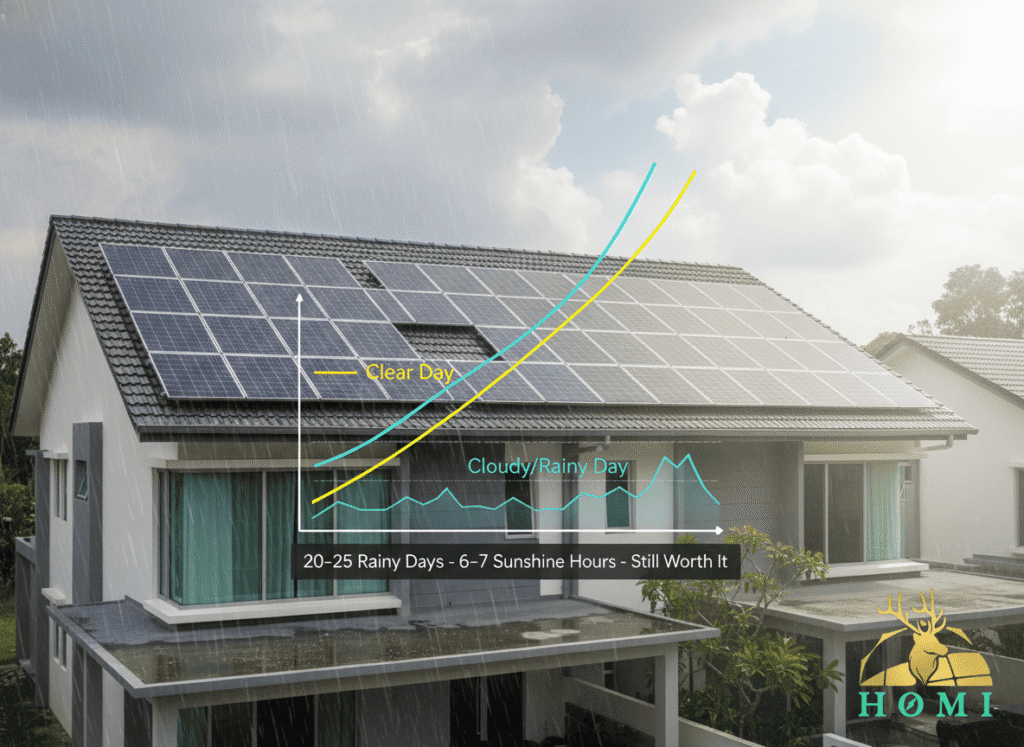
Meteorological data indicates a dry, hot phase for northern and central Malaysia lasting until April 2026. [web:234][web:236] While this is tough on comfort, it is excellent for solar production:
- Fewer cloudy days means **higher, more consistent solar yield** from 11am to 3pm. [web:241]
- Daytime cooling demand (chillers, AC) spikes exactly when solar output is strongest. [web:240]
For SMEs and landed homes, this natural alignment is the first step in cost control. The second step is choosing the right tariff strategy.
2. Understanding TNB’s Enhanced Time-of-Use (ETOU) Tariff
Under ETOU schemes for commercial and residential users, the day is split into **Peak** and **Off-Peak** zones (specific hours vary by tariff class). [web:239][web:242][web:245]
| Zone | Typical Hours (Residential Example) [web:169] | Rate Character |
|---|---|---|
| Peak | 2:00 pm – 9:59 pm (Afternoon/Evening) | Higher Rate (e.g. ~57 sen/kWh). Avoid grid usage here. |
| Off-Peak | 10:00 pm – 1:59 pm (Night + Morning) | Lower Rate (e.g. ~29 sen/kWh). Shift loads here. |
Note: Commercial ETOU hours and rates differ (e.g. Peak 8am–10pm). Always check your specific tariff class C1/C2 etc. [web:242]
3. The Solar ATAP + TOU “Double Play” Strategy
Solar ATAP allows you to self-consume your own power first. By combining this with TOU, you can execute a powerful “squeeze” on your bill:
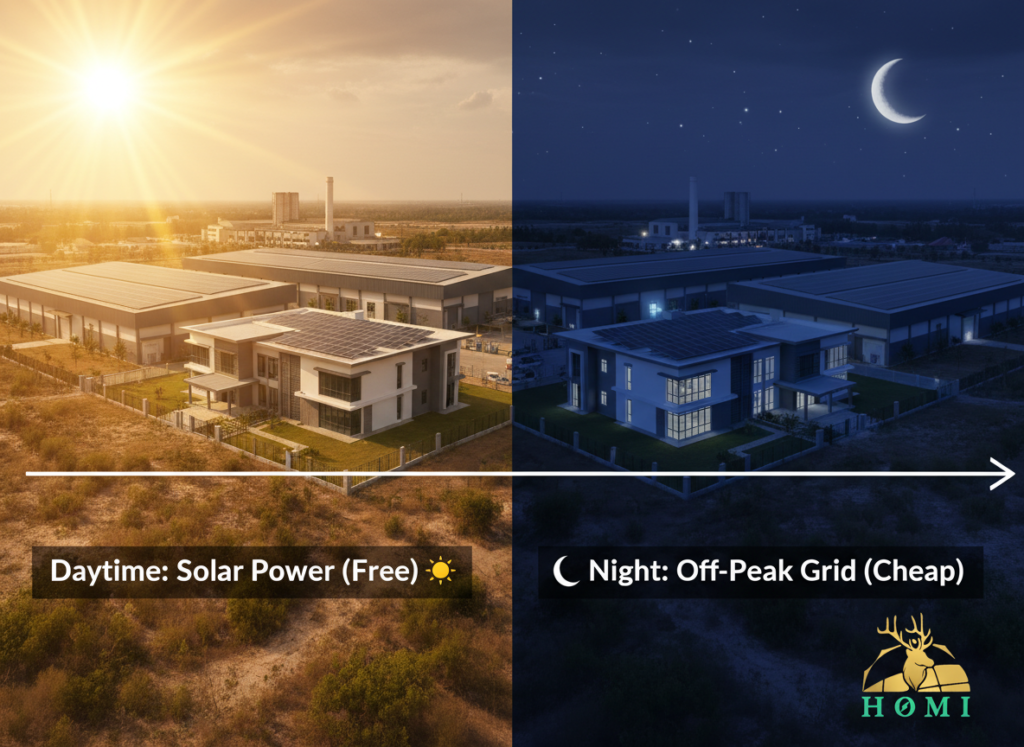
- 11am – 3pm (Midday Sun): Solar ATAP generation is at maximum. You run heavy cooling, production lines or pool pumps for free using solar, avoiding grid kWh. [web:67][web:240]
- Midday Peak (e.g. 2pm start): Your solar is still strong, covering the start of the expensive Peak window.
- Late Peak (4pm – 10pm): Solar fades. You minimise non‑essential load or rely on stored energy (if battery installed).
- Off-Peak (Night/Morning): You switch remaining heavy loads (EV charging, laundry, heavy production) to the cheap grid rate. [web:239][web:240]
Result: You delete the most expensive grid hours with solar, and pay the cheapest possible rate for the rest.
4. Interactive: Solar + TOU Savings Estimator
Heatwave TOU Savings Estimator
Estimate how much you save by shifting 100 kWh of cooling from “Peak Grid” to “Solar + Off-Peak”.
5. How HOMI Optimises Your Load Profile for 2026
We do not just sell solar panels; we engineer an Energy Strategy.
Step 1: Tariff Analysis
We check if switching your business or home to ETOU makes sense based on your load curve. Sometimes, staying on the standard tariff is better—we do the math first. [web:239]
Step 2: Peak Shaving Design
We size your Solar ATAP system to aggressively cover the 11am–4pm window, which often contains the highest cooling demand and the start of Peak pricing. [web:240][web:67]
Step 3: Implementation Guide
We give you a simple operation guide: “Run chillers hard at 1pm, pre-cool the building, then dial back at 5pm.” This behaviour change alone can save thousands for SMEs. [web:240]
FAQ: Heatwave, TOU & Solar ATAP
Is 2026 really going to be hotter than usual?
Long-range forecasts predict a dry, hot phase for Peninsular Malaysia’s west coast from February to April 2026, with temperatures often hitting 33°C or higher. [web:234][web:236] This naturally increases electricity demand for cooling.
Does every home or business qualify for TOU tariffs?
Most residential users with smart meters can apply for Enhanced Time-of-Use (ETOU). Commercial and industrial users have specific TOU tariff classes (e.g. C1, C2, E1, E2). [web:239][web:242] HOMI can check your eligibility and simulate whether switching will save you money.
Why combine Solar ATAP with TOU?
Solar ATAP generates free power during the day, which covers the expensive midday loads. By switching to TOU, you ensure that any remaining grid usage (at night) is billed at the much lower Off-Peak rate, maximising your total savings compared to a flat tariff. [web:240][web:243]