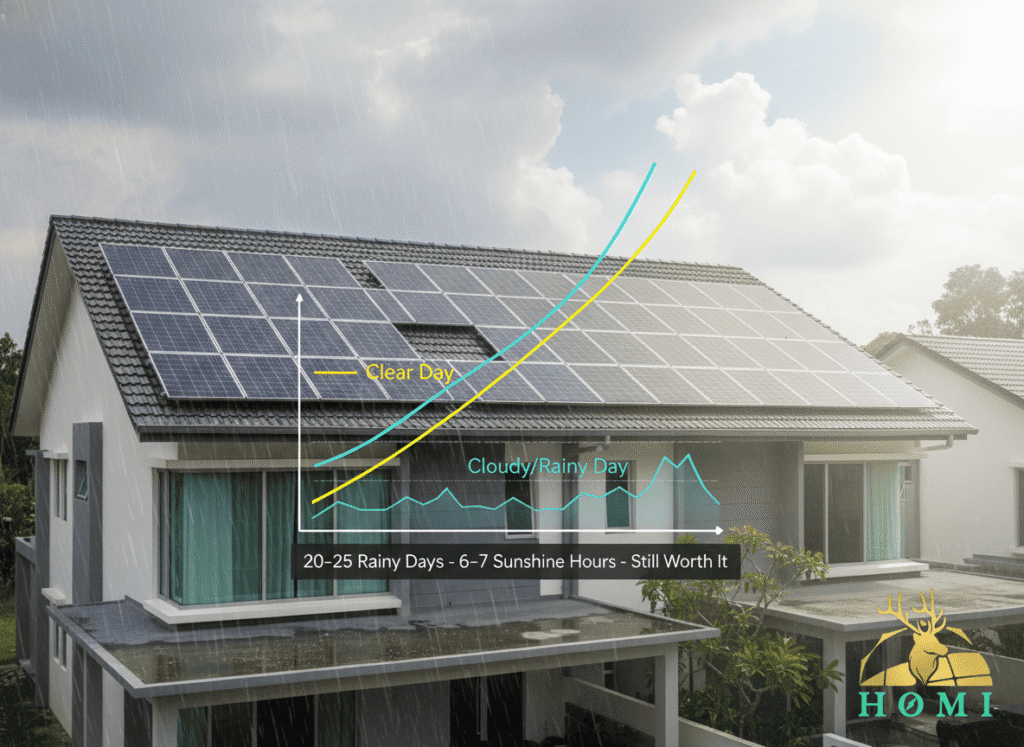

Solar ATAP for Retirees in Malaysia: How a 3–5kW System Can Stabilise Your TNB Bill in an AFA “Low Discount” Era
TNB’s newer bill format clearly separates **Generation, Network and Retail charges**, and the Automatic Fuel Adjustment (AFA) rebate—once a strong discount—has been shrinking, from -6.42 sen/kWh in late 2025 to -4.99 sen/kWh in January 2026 and -2.77 sen/kWh in February. [web:173][web:172][web:288] At the same time, Solar ATAP pays **energy‑only credits with no rollover**, making small, well‑sized systems more suitable for retirees who want predictable daytime coverage. [web:147][web:44][web:56]
This guide explains how today’s TNB bill structure affects retirees, and how a modest 3–5kW Solar ATAP system can help lock in a large part of your daytime essentials—fridge, fans, and limited air‑cond—so your monthly cash flow is more stable, not more stressful.
1. What Changed in Your TNB Bill (and Why It Matters More When You Retire)
TNB’s updated bill layout now separates your charges into Generation, Network and Retail, plus AFA. [web:288][web:173]
| Component | What It Covers | Typical Value (Domestic) |
|---|---|---|
| Generation Charge | Fuel and power plant costs for each kWh you use. | 27.03 sen/kWh (≤1,500 kWh), 37.03 sen/kWh (>1,500 kWh). [web:173] |
| Capacity & Network | Maintaining enough capacity and the grid to deliver electricity. | ≈4.55 + 12.85 sen/kWh. [web:173][web:172] |
| Retail Charge | Fixed RM 10/month for metering & billing (waived ≤600 kWh). [web:173] | RM 10 fixed (if above 600 kWh). |
| AFA (Automatic Fuel Adjustment) | Monthly fuel rebate/surcharge based on global fuel prices. | -6.42 → -4.99 → -2.77 sen/kWh from late 2025 into Feb 2026. [web:173][web:172] |
For retirees, the key message is simple: as AFA rebates shrink, **more of the real generation and network cost will be borne by you**, and those costs are harder to predict over 10–20 years of retirement. [web:173][web:288]
2. Solar ATAP Rules: Why “Stability” Beats “Aggressive ROI” for Retirees
Solar ATAP is designed around self-consumption and modest monthly credits, not long‑term credit banking. [web:147][web:44][web:77]
- You use your own solar power first during the day; only surplus is exported. [web:44][web:204]
- Domestic users receive **energy‑only credits** that offset the Energy Charge portion of the bill. [web:147][web:44][web:62]
- Credits **reset every month**—no rollover to future months, unlike NEM 3.0. [web:147][web:56][web:77]
For a retiree couple with moderate usage, this means an oversized system that exports a lot can leave money on the table, because credits beyond your monthly Energy Charge are simply forfeited. The smarter approach is to size just enough to cover daytime essentials consistently. [web:147][web:44]
3. What a 3–5kW Solar ATAP System Can Cover in Malaysia (Using Conservative Numbers)
Malaysia’s solar resource gives around **4–5 kWh of energy per day per 1 kWp** of installed capacity on average. [web:206][web:230]
| System Size | Estimated Daily Generation | Typical Daytime Essentials It Can Cover |
|---|---|---|
| 3 kWp | ≈ 3 × 4.5 = 13.5 kWh/day. [web:206] | Fridge, lights, fans in living/bedroom, plus a few hours of AC in one room. |
| 4 kWp | ≈ 18 kWh/day. [web:206][web:230] | Same as above, with more comfort hours or an extra fan/TV load consistently. |
| 5 kWp | ≈ 22–25 kWh/day. [web:206][web:230] | Fridge + fans + 1–2 AC rooms in the afternoon, plus normal daytime usage on most days. |
For many retirees, total daily usage might be in the 15–25 kWh range (450–750 kWh/month), so a 3–5kW system, sized correctly, can cover a large fraction of daytime load without regularly overshooting into useless export credits. [web:206][web:248][web:147]
4. Simple Retiree “Daytime Stability” Calculator
Retiree Daytime Stability Calculator (3–5kW Focus)
Estimate how much of your daytime usage could be stabilised by a small Solar ATAP system.
We use a conservative mid‑point of 4.5 kWh/day per kWp and assume most solar generation covers daytime hours. HOMI uses your real 12–24 month TNB history and more cautious parameters for retirees. [web:206][web:230][web:147]
5. How HOMI Designs “Retirement Mode” Solar ATAP Plans (Without Over‑Investing)
HOMI’s philosophy for retirees and near‑retirees is: **protect cash flow first, chase ROI second**.
Step 1: Analyse Your Bill Structure and AFA Exposure
- We look at 12–24 months of kWh usage and how often you cross 300, 600, 1,000 and 1,500 kWh levels. [web:206][web:248][web:289]
- We model what happens to your bill if AFA discounts stay low or even swing positive (surcharge) in future. [web:173][web:172][web:288]
Step 2: Map Your Real Daytime “Must-Haves”
- Fridge, fans, lights in the rooms you actually use, and limited AC in 1–2 rooms in the afternoon.
- No assumption of “every room AC all day”—we design for a realistic, comfortable lifestyle on fixed income.
Step 3: Simulate 3kW vs 4kW vs 5kW Under Solar ATAP Rules
- We use 4–5 kWh/day per kWp and your actual load curve to test how much daytime energy each size can safely cover. [web:206][web:230]
- We apply Solar ATAP’s monthly **energy‑only, no‑rollover** credits to highlight where extra kW bring little extra bill reduction—so you can avoid over‑investing. [web:147][web:44][web:56][web:188]
Instead of one “magic” kW number, you receive a capacity range and a long‑term stability projection, so you can see how a 3–5kW system may keep your bill within a comfortable band even if tariffs and AFA change over the years.
FAQ: Retirees, AFA Discounts and Solar ATAP
Why do shrinking AFA rebates worry retirees more than younger families?
AFA rebates, which used to be as high as -6.42 sen/kWh, have narrowed to around -4.99 and then -2.77 sen/kWh, reducing the fuel discount on each kWh. [web:173][web:172] Retirees on fixed income feel these changes more because they have less flexibility to increase earnings if tariffs rise or rebates shrink, so stabilising the “energy” part of the bill with solar can be valuable.
Is Solar ATAP still worth it for retirees if credits don’t roll over?
Yes—if the system is sized to your daytime essentials instead of your roof size. Solar ATAP still lets you reduce the Energy Charge portion of your bill every month, but the focus for retirees should be on predictable self‑consumption and stability rather than maximising export or chasing a RM 0 bill. [web:147][web:44][web:56]
Why does HOMI use conservative assumptions for retiree solar simulations?
HOMI uses mid‑range generation estimates (around 4–5 kWh/day per kWp), realistic performance degradation and cautious assumptions about future tariffs and AFA to avoid over‑promising savings to retirees. [web:206][web:230][web:147] The objective is to protect your cash flow and avoid over‑investment, not to present the most optimistic scenario.