
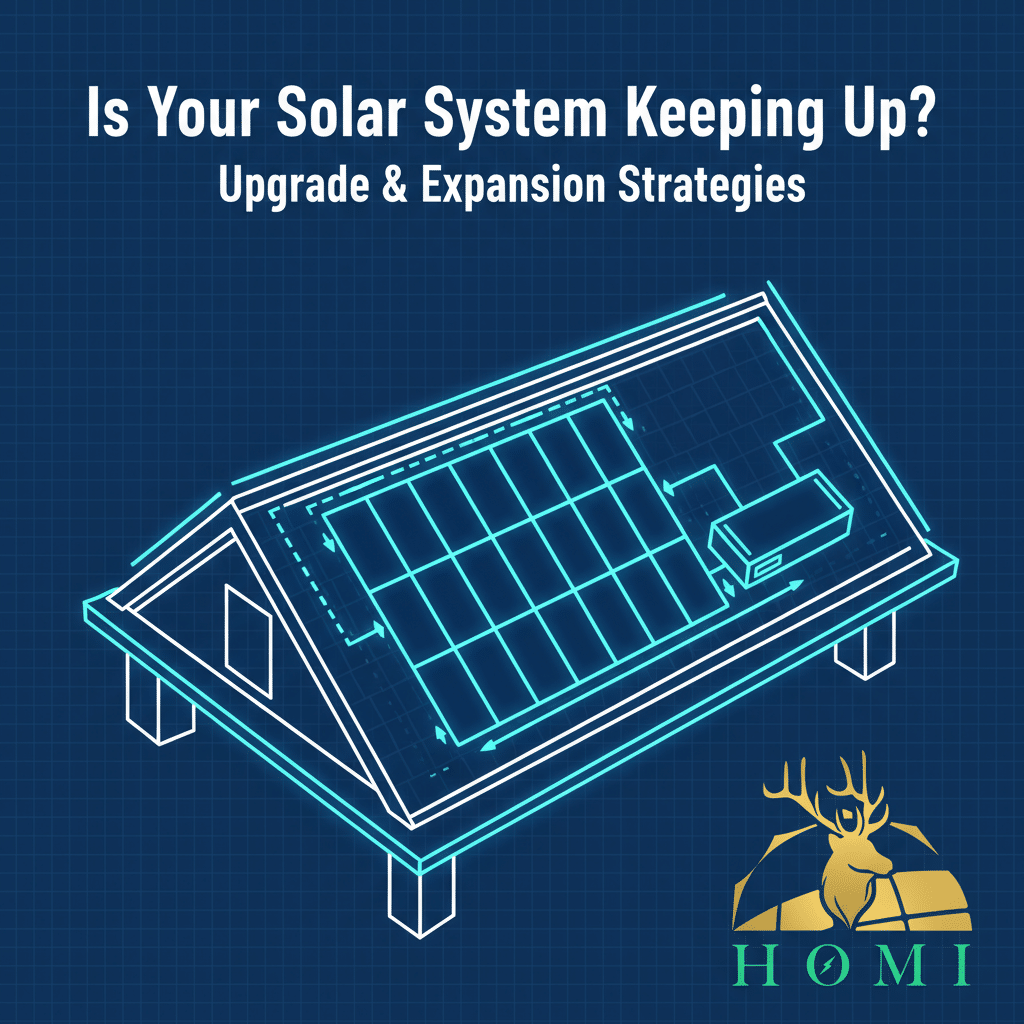
Why Does My Solar System Feel “Not Enough”?
You might be facing one of these common scenarios:
-
Increased Household Consumption: You bought an electric vehicle and need a home charger; you added a new air-conditioner; your family has grown, and so has the number of electronic devices.
-
Lifestyle Changes: More time spent working from home has significantly increased your daytime electricity usage.
-
Rainy Season Anxiety: During the monsoon season, consecutive cloudy days cause a sharp drop in solar generation, and your TNB bill starts climbing again.
If your system is functioning correctly, feeling like it’s “not enough” is a clear sign that it’s time to consider an upgrade.
1. First Step to Upgrading: System Compatibility Assessment
Before buying any new equipment, a “health check” of your existing system is essential, focusing on compatibility.
-
The Inverter is Key:
-
Check Max Capacity: Your inverter is the brain of the system and has a maximum power handling capacity. For instance, a 5kW inverter cannot support a solar array that significantly exceeds its rating. You need to check its specifications to see if there’s any “headroom” for adding more panels.
-
MPPT Inputs: Check how many Maximum Power Point Tracker (MPPT) inputs your inverter has. If there’s a spare MPPT input, adding a new string of panels is relatively straightforward.
-
-
Matching Solar Panels:
-
The “String” Rule: Solar panels are typically wired together in “strings.” If you want to add panels to an existing string, the electrical characteristics (current, voltage, etc.) of the new panels must closely match the old ones. A mismatch can degrade the performance of the entire string.
-
Best Practice: The safest approach is to install a new, separate string of panels and connect it to a spare MPPT on the inverter. If there are no spare inputs, you may need to upgrade the inverter as well.
-
2. The Two Main Upgrade Paths: More Panels vs. a New Battery
-
Path 1: Adding More Panels (Capacity Expansion)
-
Goal: To increase overall energy generation, especially on sunny days.
-
Who is it for? Users with high daytime electricity consumption who want to maximize their TNB bill offset.
-
Cost-Effectiveness: If the inverter doesn’t need replacing, this is often the most affordable upgrade path. You only pay for the new panels, mounting hardware, and labor.
-
-
Path 2: Adding a Battery (Energy Storage)
-
Goal: To store excess daytime energy for use at night or as a backup during power outages.
-
Who is it for? Users with high evening electricity usage, those who want to avoid peak tariff rates, or live in areas with frequent blackouts. It’s particularly effective for optimizing rainy season performance by storing energy from a sunny day for use on a cloudy one.
-
Compatibility Note: The easiest way to retrofit a battery to an existing system is to choose an “AC-Coupled Battery.” It comes with its own inverter and can work with almost any existing grid-tied solar system, offering great installation flexibility.
-
3. Optimizing for the Rainy Season
Besides expanding your system, changing your consumption habits is vital during Malaysia’s monsoon season. Try to schedule energy-intensive activities like laundry, drying, or using the oven for sunny midday periods to maximize your self-consumption rate.
4. Future Potential: Bifacial Solar Panels
-
What are they? These panels can capture reflected light from their rear side, potentially boosting energy generation by 5%-20%.
-
Potential in Malaysia:
-
Roof Type is Crucial: The performance of bifacial panels heavily depends on the reflectivity of the surface beneath them. They work great on light-colored metal deck roofs or when mounted on high racks. However, the rear-side gain is minimal if they are laid flat on dark-colored tiles.
-
Cost Consideration: Bifacial panels are currently priced slightly higher. When upgrading, you must evaluate if the extra energy gain justifies the additional cost.
-
Conclusion:
Upgrading a solar system is a technical task, not just a matter of adding more components. Always consult a professional installer to conduct an on-site survey and system analysis. They can design the most logical and cost-effective upgrade plan to ensure your green energy investment continues to grow in value.