
Your Wallet is Being Drained by “Invisible Charges”
When receiving the monthly TNB bill, most people only look at the “Total Payable” at the bottom right. If the number goes up, we usually blame the family: “Did we leave the aircon on too long?”
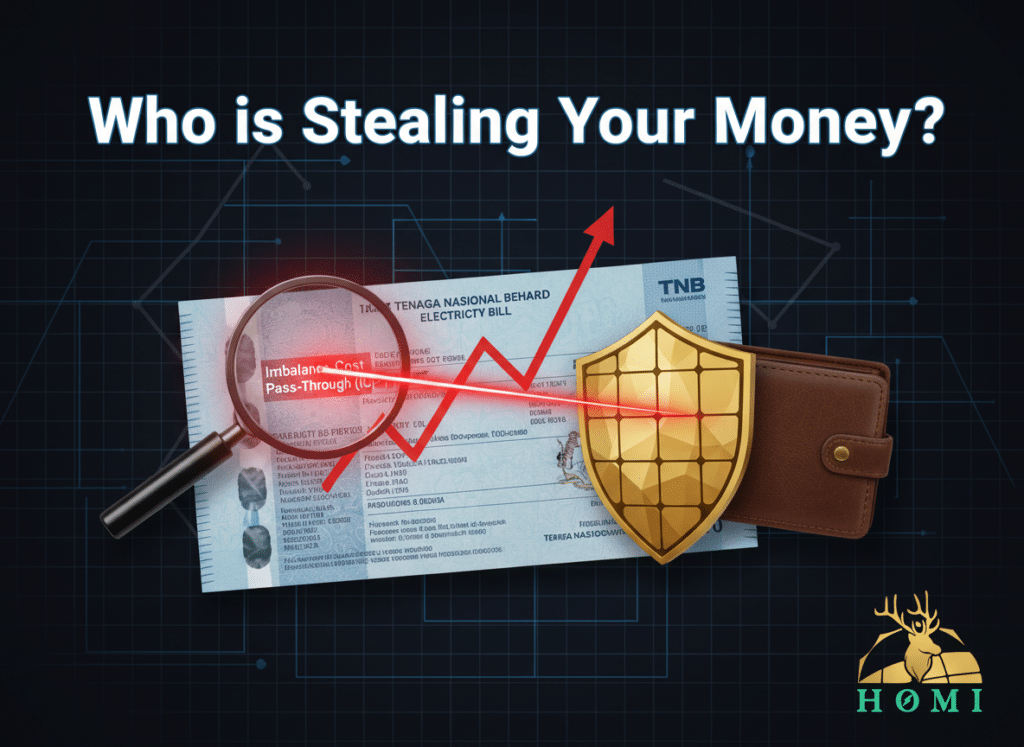
But sometimes, it’s really not your fault. If you scrutinize the bill details, you’ll find a line item called ICPT (Imbalance Cost Pass-Through). This is the real culprit making your electricity quietly more expensive.
What is ICPT? (Simply Put: Fuel Surcharge)
Malaysia’s electricity generation relies heavily on coal and natural gas.
-
The Mechanism: When global coal or gas prices rise, TNB’s generation costs increase. The government passes these extra costs on to consumers via the ICPT mechanism.
-
The Reality: For commercial/industrial users and high-consumption households, ICPT often appears as an additional Surcharge.
How Does It “Steal” Your Money?
ICPT is calculated on a per kilowatt-hour (per kWh) basis. This means: The more electricity you buy from TNB, the heavier the “fine” you pay.
It’s like filling up petrol: the base price might stay the same, but you get charged an extra “transport fee” for every liter. This fee fluctuates and historically trends upward. As long as you rely 100% on the grid, you cannot escape the harvest of global energy inflation.
Solar: Your Financial Shield Against Inflation
In this context, installing solar is no longer just about being eco-friendly; it’s a savvy household financial maneuver.
The logic of solar against ICPT is brutal but effective: Slashing the Billing Base.
-
Reduce Import: Solar powers your home directly. Suppose you used to buy 1,000kWh from TNB; now you might only need 300kWh.
-
Neutralize the Math: ICPT is a multiplication game (kWh × Rate). When your kWh drops drastically, even if the ICPT rate skyrockets, the impact on your wallet becomes negligible.
Conclusion: Without solar, you are exposed to a “floating rate” market, vulnerable to fuel price hikes. Installing solar is equivalent to locking in a “low fixed rate” for your electricity costs for the next 25 years, building a solid defense against invisible inflation.