
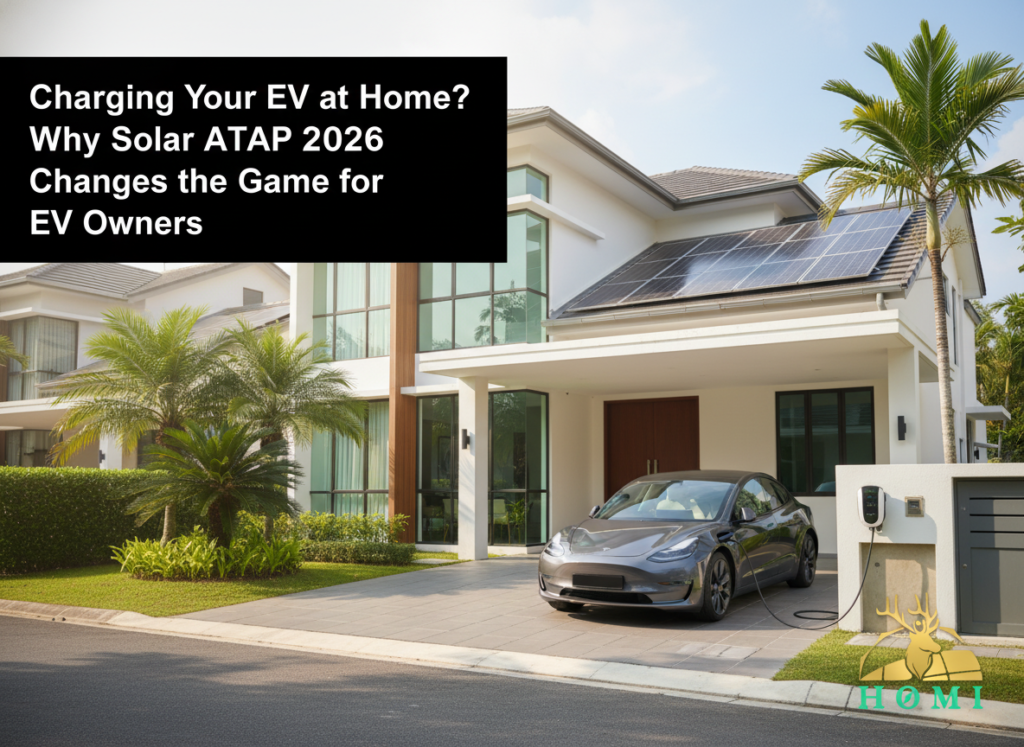
Charging Your EV at Home? Why Solar ATAP 2026 Changes the Game for EV Owners
Owning an EV in Malaysia feels smart—until home charging starts pushing your electricity bill higher month after month. For landed homeowners, Solar ATAP 2026 creates a new opportunity: instead of letting extra daytime solar go to waste, you can use it to charge your EV when your roof is producing the most power.
Why EV Owners Should Think Differently About Solar
EV charging is one of the few large household loads you can intentionally move into daytime hours. That means your car can become a practical way to absorb solar production at home, especially when air-conditioning, appliances, and family routines do not fully use all the energy your system produces.
How Solar ATAP 2026 Changes the Equation
The old mindset was simple: install as much solar as possible and let the extra energy balance out later. That is no longer the best approach. With the new framework, system design needs to focus on realistic daytime usage, EV charging habits, and household demand patterns so your solar works harder for your lifestyle—not just on paper.
A Smarter Daytime Charging Strategy
If you work from home, have flexible charging hours, or can schedule your EV to charge in late morning and early afternoon, you may be able to consume more solar directly. This helps reduce unnecessary surplus while giving your household a more balanced energy profile. For homeowners on time-based billing plans, charging schedules can also be planned more carefully around usage periods.
Why HOMI’s End-to-End Design Matters
Adding solar for an EV is not only about panel count. The right plan should consider your roof space, household load, charger behavior, daytime parking habits, and future energy use. HOMI helps homeowners design a complete setup—from solar sizing and compliance planning to EV-friendly system strategy and practical bill optimization advice.
Simple EV Solar Usage Estimator
Use this quick tool to estimate how much of your EV charging could align better with daytime solar.
Plan for Compliance, Not Guesswork
In 2026, the best solar system for an EV owner is not automatically the biggest one. It is the one designed around your real driving and charging behavior. That is why data-based sizing matters: it helps you match your system to actual consumption instead of paying for excess capacity you may not use efficiently.
FAQ
Can I use daytime solar to charge my EV at home?
Yes. If your EV is parked at home during solar production hours, daytime charging can help you use more of your own generated power directly.
Does Solar ATAP 2026 make system sizing more important?
Yes. Because usage patterns matter more, your solar system should be sized around your household load and charging habits instead of general assumptions.
Can HOMI help with both solar and EV charging strategy?
Yes. HOMI supports homeowners with end-to-end planning, including solar sizing, compliance guidance, and practical recommendations for EV-friendly energy use.