


Solar-Ready or Repair First? A Malaysian Roof Checklist
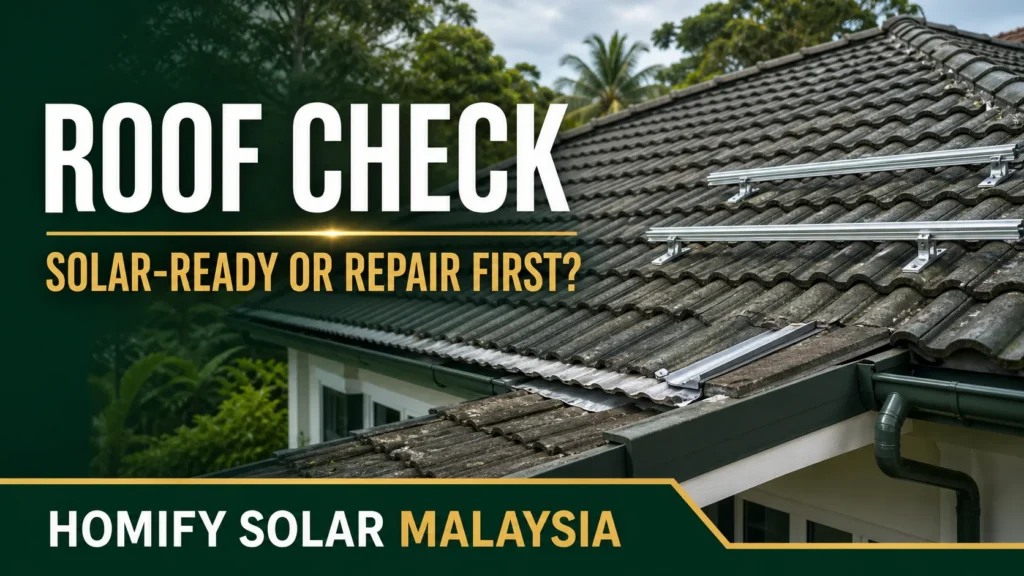
Solar panels can remain on a roof for many years, so known roof problems should be addressed before rails and modules make access more complicated. A solar survey is not a substitute for a qualified roof or structural assessment where defects are visible.
Look for water evidence first
Check ceilings, roof spaces and walls after heavy rain. Water stains, mould, damp timber, cracked flashing and repeated sealant repairs are warning signs. Record where the symptoms appear because the entry point may be higher up the roof.
Match mounting to the roof type
Concrete tiles, clay tiles, metal decks and flat roofs require different brackets, waterproofing details and load considerations. Ask how penetrations are sealed, how broken tiles are replaced, how cable routes avoid water traps and how drainage paths remain clear.
Plan future access
A dense panel layout can make future roof maintenance, gutter cleaning and emergency access difficult. The design should retain practical pathways, safe edge clearance and access to isolators and equipment. If the roof is near the end of its useful life, repairing or replacing the affected area first may avoid the cost of removing and reinstalling panels later.
What to document before work starts
- Dated roof and ceiling photos.
- Existing cracks, stains, loose tiles and previous repairs.
- Mounting method and waterproofing detail.
- Structural or competent-person assessment where required.
- Workmanship warranty scope and the process for reporting a leak.
Use HOMI’s real project gallery to see the rail and panel installation sequence. A proposal should explain both energy design and roof execution, not treat the roof as an empty rectangle.
Frequently asked questions
Can solar panels cause roof leaks?
Poor mounting, damaged tiles or unsuitable waterproofing can create risk. Correct design, installation and documentation reduce that risk.
Should an old roof be replaced before solar?
If the roof is near the end of its useful life or has unresolved defects, repair or replacement before solar may avoid later removal costs.
Is a drone photo enough for a roof assessment?
No. Aerial imagery helps plan layout, but close inspection and qualified assessment may still be required.
This article reflects official information checked on 1 August 2026 and is general guidance. Programme rules, tariff treatment, approval and actual savings remain subject to the latest PETRA, SEDA, Energy Commission and TNB requirements plus the property bill, roof and usage pattern.
Official sources
Want HOMI to review your TNB bill?
Send your usage pattern and HOMI can estimate whether Solar ATAP makes sense for your home or business.
Request a Roof and Bill Review