


Solar battery sizing in Malaysia: usable capacity and essential loads
Start with what must stay powered, not the largest battery advertised. Usable energy in kWh and available output in kW answer different questions. Backup also depends on compatible equipment and the actual circuit design; a battery is not automatically whole-house protection.
Write an essential-load brief
List the fridge, selected lights, communications and any other genuinely essential load, with operating hours and starting behaviour. Treat medical or life-safety equipment separately with its specialist supplier. Leave high-demand appliances out of the first draft until the designer checks their needs.
Ask what the quoted capacity means
Request nominal capacity, usable capacity, reserve setting, output limit and the assumptions behind runtime. A headline kWh figure does not explain conversion losses or remaining capacity over time. Compare two proposals using the same essential loads and backup duration, rather than different optimistic examples.
Compare backup and bill-saving modes
Using stored energy every evening may leave less reserve for an unexpected outage. Ask how the controls prioritise reserve and whether the proposed installation can recharge during an outage. Obtain a written demonstration and handover plan instead of assuming every solar-storage system behaves the same way.
Before you decide
- Identify the essential circuits and agreed backup duration.
- Compare usable energy and continuous or starting output separately.
- Record reserve settings, equipment compatibility and warranty conditions.
- Ask a competent designer to test the proposed loads; do not modify circuits yourself.
Discuss your property with HOMI
Homi Solar Malaysia can help turn these questions into a clear property brief. Start with your location, electricity use and the decision you need to make. Keep bills, identity records and detailed customer information in an appropriate private channel, not public comments. An initial discussion is not engineering approval, an accepted quotation or a rebate decision. Ask for a dated written scope, the assumptions used, exclusions and the next responsible party. Recheck changing policy with the relevant authority before committing; do not treat a general article as a personalised design or a guaranteed outcome.
Solar ATAP guide · Installation projects · Contact HOMI
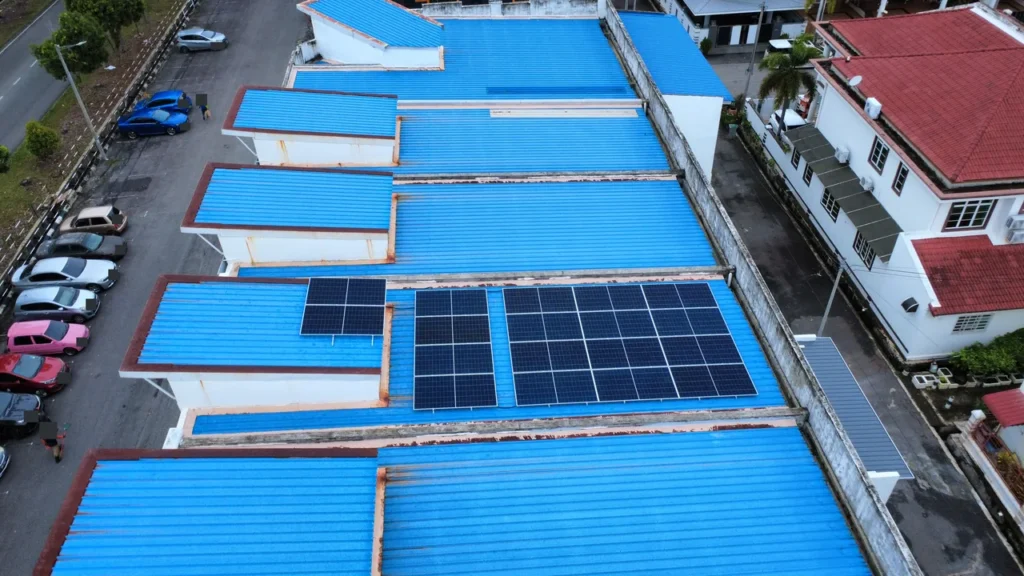
Cover: an approved HOMI rooftop-project photograph reused as an illustration. Faces and vehicle identifiers have been privacy-redacted. It is not evidence of the equipment or results discussed in this guide.
Frequently asked questions
Can I size a battery from my monthly bill alone?
No. A monthly total does not reveal which loads operate together or how long essential circuits need backup.
Does more kWh always mean more appliances can run?
No. Output limits, starting demand and the backed-up circuits also matter.
Will storage guarantee an uninterrupted supply?
No. Switching behaviour, design limits and equipment conditions must be checked for the intended loads.
This article reflects official information checked on 1 October 2026 and is general guidance. Programme rules, tariff treatment, approval and actual savings remain subject to the latest PETRA, SEDA, Energy Commission and TNB requirements plus the property bill, roof and usage pattern.
Official sources
Want HOMI to review your TNB bill?
Send your usage pattern and HOMI can estimate whether Solar ATAP makes sense for your home or business.
Discuss My Solar Plan