


Solar thermal reports: what should you check?
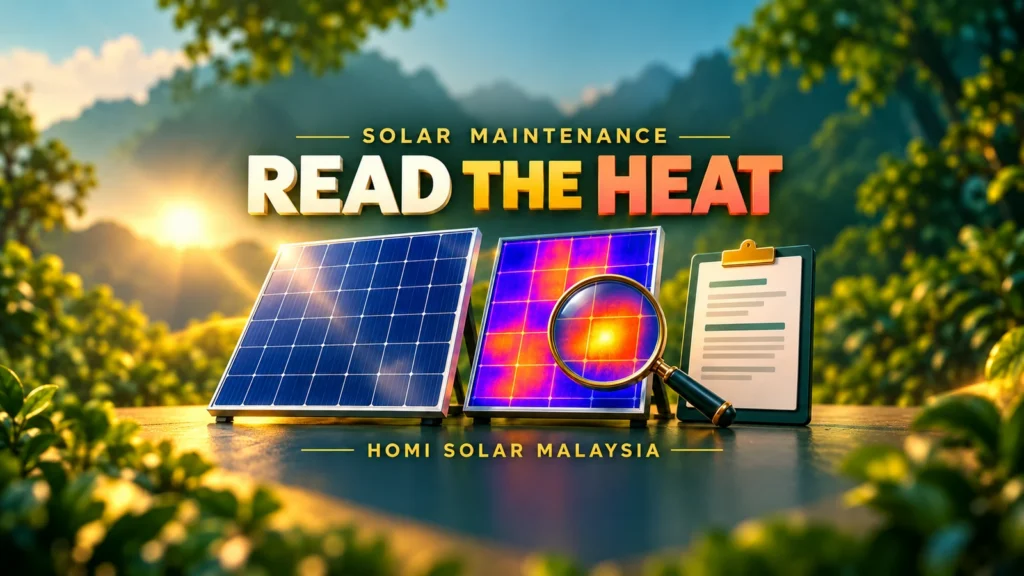
A useful solar thermal report should connect each finding to an identifiable module, its capture conditions and a clear follow-up action. Do not approve a replacement solely because a panel looks red in a presentation. Ask the qualified team what the image establishes, what remains uncertain and how the suspected cause will be checked.
Homi Solar Malaysia prepared this guide for homeowners and facility managers reviewing inspection proposals or an existing report. Its focus is evidence and handover questions. It is not a camera operating procedure, a wiring guide or a statement that every Malaysian rooftop needs the same inspection schedule.
Three records, different questions
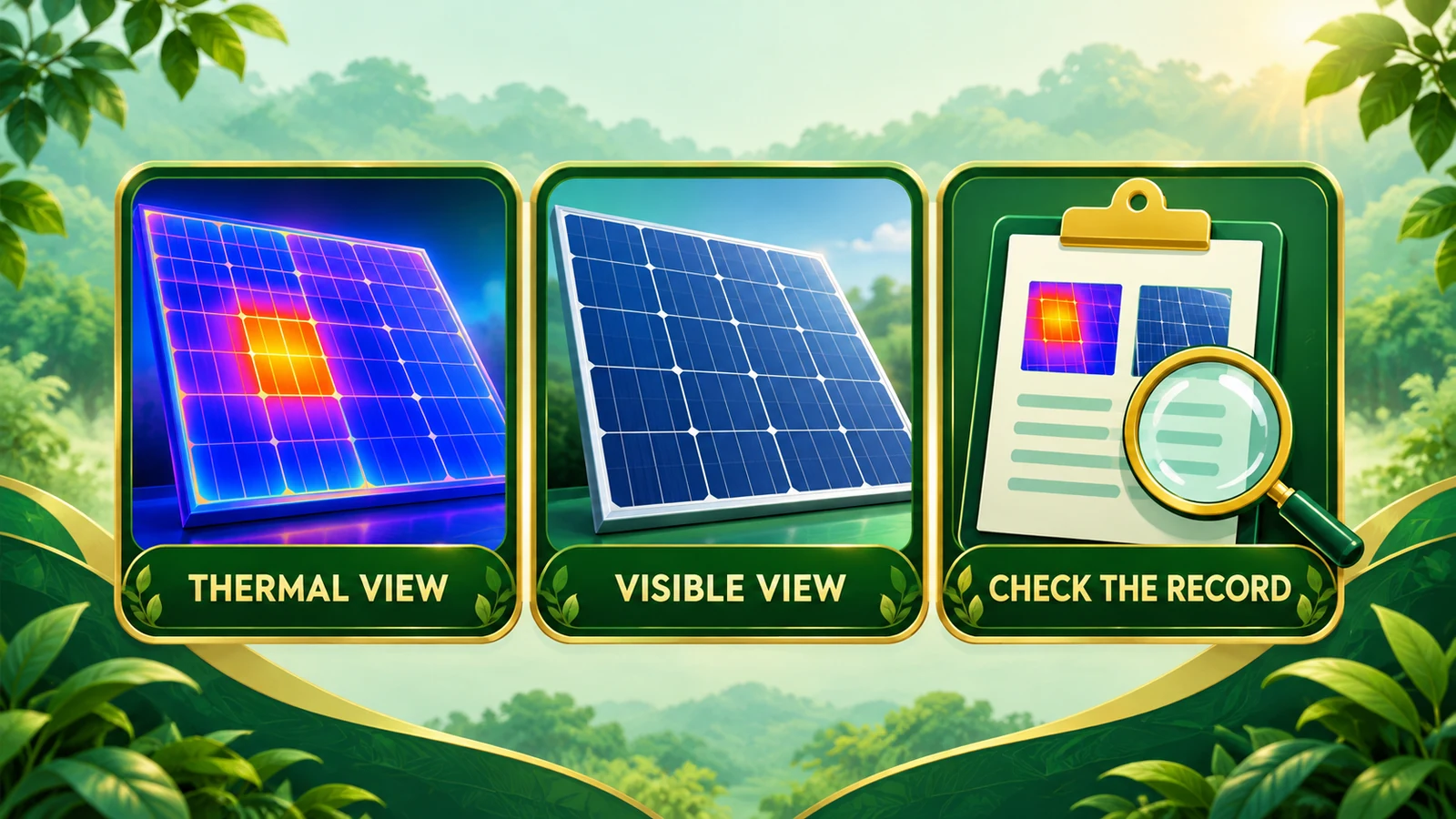
The IEA PVPS imaging review describes infrared inspection as a way to detect thermal anomalies while a PV system operates. The NREL O&M guide discusses visual inspection, thermal imaging and testing within a maintenance programme. The comparison below is HOMI’s reading aid based on those sources, rather than a universal acceptance standard.
| Record | What to look for | What it does not settle alone |
|---|---|---|
| Infrared image | Location and thermal pattern under recorded conditions | The confirmed cause, repair scope or annual energy loss |
| Ordinary photograph | The matching module and visible surface conditions | The complete electrical condition of the module |
| Electrical test record | Named test, instrument, result and equipment covered | Conditions of equipment outside the stated test scope |
Read the rows together. Ask the report author to distinguish an observation from a suspected explanation and a confirmed finding. A label such as “hot spot” should lead to a traceable investigation record, not an unexplained percentage saving or a blanket statement about every panel.
Ask for the capture context
The NREL guide and IEA review discuss environmental and imaging conditions. For an owner, the practical question is whether the report records enough context for its interpretation: date and time, operating state, sunlight and weather, camera information and the matching visual record. Ask the qualified inspector to explain any missing information or limitations.
Request the original files as well as the summary PDF, subject to the agreed contract. A screenshot pasted into a slide can be useful for discussion, but ask how it links back to the relevant module and inspection record. If a report compares two visits, ask whether the author considers the observations comparable and why.
Define the inspection coverage
Before accepting a quotation, write down what will be inspected and what will not. Ask whether the scope covers all modules or a sample, how module positions are identified, and whether the work includes other equipment or only the panel faces. Ask the team to identify any access or visibility limitations in the final report.
For a commercial site, agree who will accompany the inspection team, hold the system drawings and receive the findings. For a home, find the installation handover documents first. Our solar handover document guide can help you organise the discussion. None of these questions requires you to climb onto the roof or open electrical equipment.
Keep diagnosis and repair separate
The US DOE O&M guidance separates inspection, recommended corrective work and validation after corrective services. Use that sequence as a management prompt, without treating US government contract rules as Malaysian requirements.
Ask for a finding list with the equipment location, supporting evidence, the proposed next step and the person responsible. If replacement is proposed, request the technical reason, the warranty route and the acceptance record expected after the work. Agree how the team will document closure instead of accepting only a new photograph.
Five checks before you sign off
- Match each finding to a module or equipment identifier.
- Check the recorded date, conditions and operating state.
- Request the paired ordinary photo and relevant test record.
- Separate observed facts, possible causes and confirmed findings.
- Name the follow-up owner and agree the closure evidence.
This is HOMI’s suggested review checklist, not a regulatory inspection form. Keep the original report, the agreed scope and later repair records together. Ask which unresolved items need professional attention and how quickly the responsible team recommends action. Follow the site’s established safety and emergency arrangements; this article does not prescribe shutdown steps.
Malaysian scope and human help
The ST SELCO index, checked on 28 October 2026, lists its June 2026 guideline for Peninsular Malaysia, issued on 24 July 2026. It is jurisdiction context, not a thermal-inspection certificate. Sabah and Sarawak require separate checks with the relevant local authority and electricity provider.
Solar ATAP rules, tariff treatment, approval and savings depend on the latest PETRA, SEDA, ST and TNB requirements plus the actual bill, roof and usage pattern. This guide promises no defect diagnosis, warranty acceptance, energy recovery or return on investment.
See Homi Solar Malaysia services or contact the human team about your report questions. Start with the report’s date and stated scope. Agree a private document channel before sharing records. Keep unredacted bills, account details, site-security information and customer data out of public comments and public AI tools.
Frequently asked questions
Does a red panel mean it is defective?
The colour alone is not a confirmed diagnosis. Ask for the capture context, matching photo and the professional assessment of the cause.
Can the image tell me my annual bill loss?
A thermal picture alone does not establish annual kWh or ringgit loss. Ask for a separate, documented performance assessment and its assumptions.
Must every inspection use a drone?
Ask the team to justify the proposed method against the agreed coverage and site access. A drone label alone does not define the quality or completeness of the report.
Can I check the suspected module myself?
Use the records to ask questions from a safe location. Leave roof access, electrical testing and remedial work to the appropriately qualified team.
Sources checked 28 October 2026
- IEA PVPS — Review on Infrared and Electroluminescence Imaging for PV Field Applications
- NREL / current NLR repository — Best Practices for Operation and Maintenance of Photovoltaic and Energy Storage Systems
- US Department of Energy FEMP — Life Cycle of Photovoltaic Systems: Operate and Maintain an Existing Photovoltaic System
- Suruhanjaya Tenaga — Self-Consumption (SELCO) official index
This article reflects official information checked on 28 October 2026 and is general guidance. Programme rules, tariff treatment, approval and actual savings remain subject to the latest PETRA, SEDA, Energy Commission and TNB requirements plus the property bill, roof and usage pattern.
Want HOMI to review your TNB bill?
Send your usage pattern and HOMI can estimate whether Solar ATAP makes sense for your home or business.
Discuss Thermal Report Records