


Solar safety labels and shutdown information: a Malaysian owner’s handover check
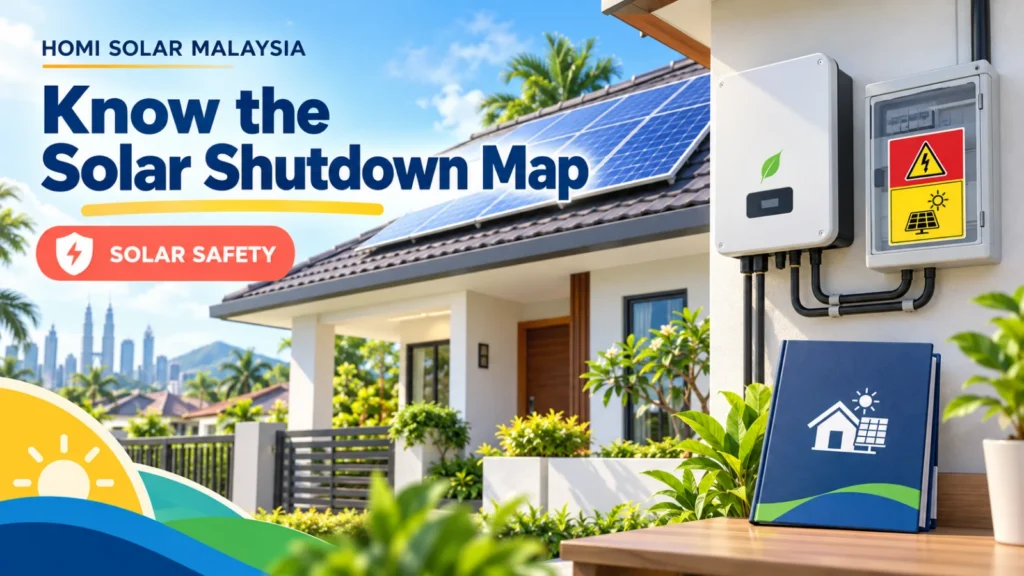
A solar handover is not complete when the app works and the panels look tidy. An owner should also be able to locate the permanent solar warning label, identify the system schematic and isolation points, keep the relevant commissioning records, and know who to call without opening equipment or attempting an electrical test.
For self-consumption systems in Peninsular Malaysia, the Energy Commission’s 2026 guideline says the owner or occupier is responsible for management, operation, maintenance and safety up to the point of interconnection. It also addresses permanent labelling where a premises has two sources of supply and requires qualified testing and commissioning with signed Form G and Form H copies kept by the consumer. Those are reasons to make the safety pack usable, not just file it away.
Start with the exact scheme and system boundary
First write down the scheme named in the approved documents. A self-consumption installation, NEM Rakyat, NEM GoMEn and another arrangement may not use identical forms or approval steps. The current 2026 Energy Commission documents are specific to Peninsular Malaysia; Sabah and Sarawak owners should confirm the applicable local utility and regulator requirements.
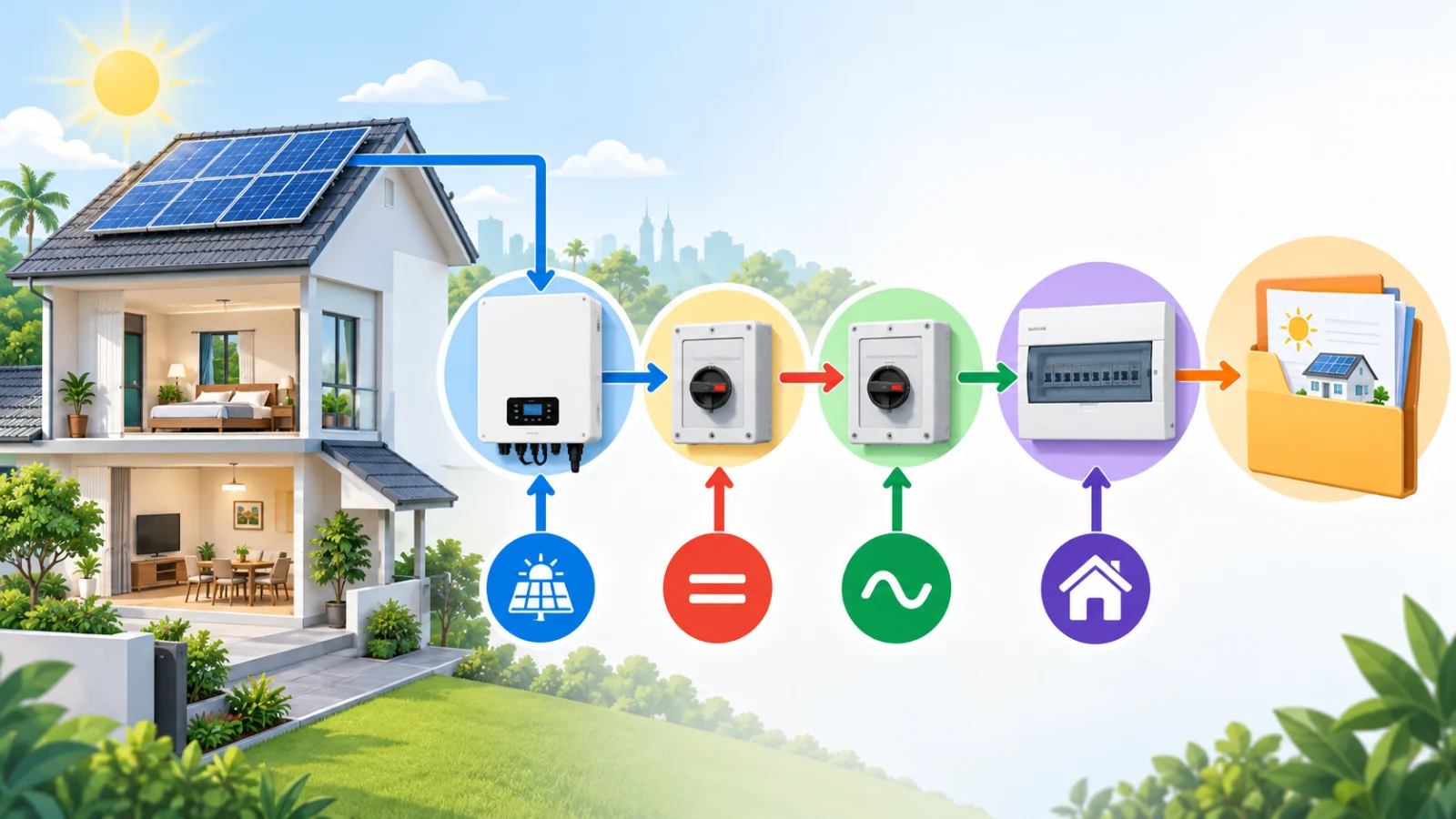
Then ask the installer to mark, on one clear diagram, the utility supply, solar array, inverter, AC and DC isolation points, distribution board, meter and point of interconnection. The diagram should match what is actually installed. It should not imply that turning off one familiar wall switch makes every solar conductor safe in daylight.
Owner-facing handover table
The following is a practical editorial checklist derived from the official sources. It is not a universal legal checklist and not a DIY shutdown sequence.
| Handover item | What to verify | Safe owner action |
|---|---|---|
| Permanent solar warning label | Legible, weather-resistant and visible at the relevant conspicuous location; it identifies that the premises has utility and solar supply. | Photograph it, note its location and request replacement if it becomes unreadable. Do not remove it for decoration. |
| Single-line schematic | It matches the installed array, inverter, boards, meters and interconnection point. | Keep a digital and printed copy with the equipment model list and as-built date. |
| Isolation map and emergency information | Every marked device corresponds to a physical location and the installer explains what a non-technical owner should and should not do. | Use the map to direct a licensed professional or emergency responder. Do not operate unfamiliar DC equipment or open covers. |
| Commissioning and scheme records | For the applicable route, the handover pack includes signed commissioning records, approvals and any Form G and Form H copies required by the current guideline. | Store them by property, system serial number and date; ask the competent person to correct missing or inconsistent records. |
| Service and emergency contacts | Installer, competent person, warranty and insurer contacts are current, with the system address and release or job reference. | Save one offline copy. If there is smoke, fire, water ingress or exposed wiring, keep away and call emergency services and the installer. |
What the owner should not test
Official commissioning material includes protection, earthing, cable identification and isolation-device tests, but these belong to qualified competent persons. A homeowner checklist must not turn those technical tests into instructions to open an inverter, remove a cover, touch a conductor, climb onto a wet roof or repeatedly operate DC switches.
If a label is missing or a diagram does not match the installation, photograph the discrepancy from a safe position and raise it with the installer or competent person. If there is an immediate hazard, move people away. The objective is to communicate the system boundary clearly, not to diagnose live equipment.
A five-minute document drill
- Open the handover folder and find the current schematic without searching through private electricity bills.
- Point to each marked location from a safe standing position; do not open or operate equipment.
- Confirm the installed model and serial records match the handover pack.
- Confirm the service contact answers for this exact site and system.
- Record a review date, especially after renovation, inverter replacement, meter work or ownership change.
Homi Solar Malaysia can help organise a site-specific solar handover review. See the current solar service route or contact a person at HOMI. Keep private bills, account numbers and customer information out of public comments or AI tools.
Regional and safety boundary: This article is general owner education based on official information checked on 9 October 2026. It is not an electrical shutdown instruction, regulatory approval, legal advice or a substitute for a registered competent person. The cited 2026 scheme documents apply to Peninsular Malaysia; confirm current local requirements for Sabah or Sarawak.
Frequently asked questions
Does switching off the inverter make the whole solar system safe?
No. Solar equipment can have more than one source and some conductors may remain energised. Follow the site-specific instructions from the competent person and do not improvise a shutdown procedure.
Should Form G and Form H be in every owner’s folder?
The current Energy Commission self-consumption guideline says signed Form G and Form H copies are to be kept by the consumer. Other schemes may have different document sets, so confirm the exact route and current requirement.
Can an owner test the DC isolator during a handover check?
Not as a DIY test. The owner can verify that the isolator is shown on the diagram and that its location is explained, while functional electrical testing remains with a qualified competent person.
When should the safety pack be reviewed?
Review it after equipment replacement, renovation, meter or distribution-board work, storm damage, property transfer, or whenever a label, contact or diagram no longer matches the site.
Official sources checked
- Energy Commission: self-consumption solar PV guideline, revision 15 June 2026
- Energy Commission: NEM Rakyat and NEM GoMEn guideline page, Revision 1/2026
- SEDA: testing and commissioning technical checklist
This article reflects official information checked on 9 October 2026 and is general guidance. Programme rules, tariff treatment, approval and actual savings remain subject to the latest PETRA, SEDA, Energy Commission and TNB requirements plus the property bill, roof and usage pattern.
Want HOMI to review your TNB bill?
Send your usage pattern and HOMI can estimate whether Solar ATAP makes sense for your home or business.
Arrange a Solar Handover Check